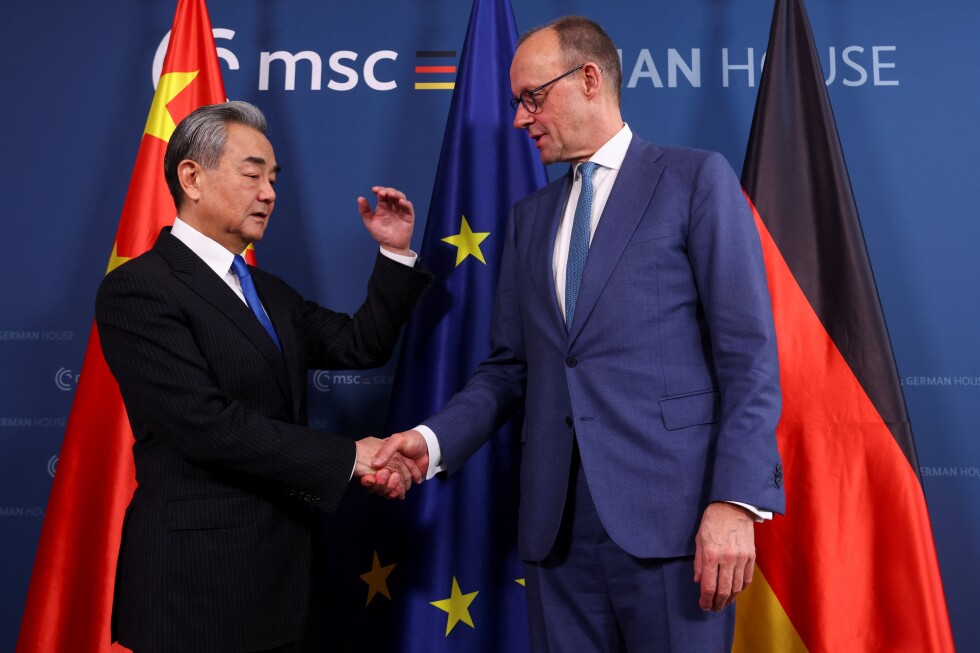
German Chancellor Friedrich Merz commenced a pivotal two-day diplomatic mission to Beijing on Wednesday, marking his inaugural official visit to China amidst escalating economic tensions and shifting global power dynamics. The visit occurs against the backdrop of Germany’s record trade deficit with China and fundamental disagreements regarding Beijing’s stance on Russia’s invasion of Ukraine.
Merz’s itinerary includes high-level meetings with Chinese Premier Li Qiang and President Xi Jinping, whose reduced international travel has made Beijing the necessary destination for foreign leaders seeking dialogue. The Chancellor’s delegation comprises business executives aiming to bolster commercial ties, even as German manufacturers face unprecedented competition from Chinese electric vehicle makers and other advanced industries.
Recent trade statistics reveal a concerning imbalance: German imports from China surged by 8.8% to €170.6 billion last year, while exports to China declined by 9.7% to €81.3 billion. This growing deficit has intensified German demands for reduced trade barriers and increased market access for foreign competitors in China.
The geopolitical dimension remains equally contentious. While China seeks international support against Trump’s challenges to global institutions, Merz has expressed skepticism regarding Beijing’s vision for a 21st century world order. The Chancellor previously stated that Germany should harbor ‘no illusions’ about China’s ambition to define a new multilateral framework according to its own rules.
This visit follows similar trips by French President Macron and other European leaders, reflecting Europe’s complex balancing act between economic partnership and strategic competition with China. Germany’s approach of ‘de-risking’—reducing dependence on Chinese markets and strategic materials like rare earths—demonstrates this nuanced positioning amid evolving global power dynamics.