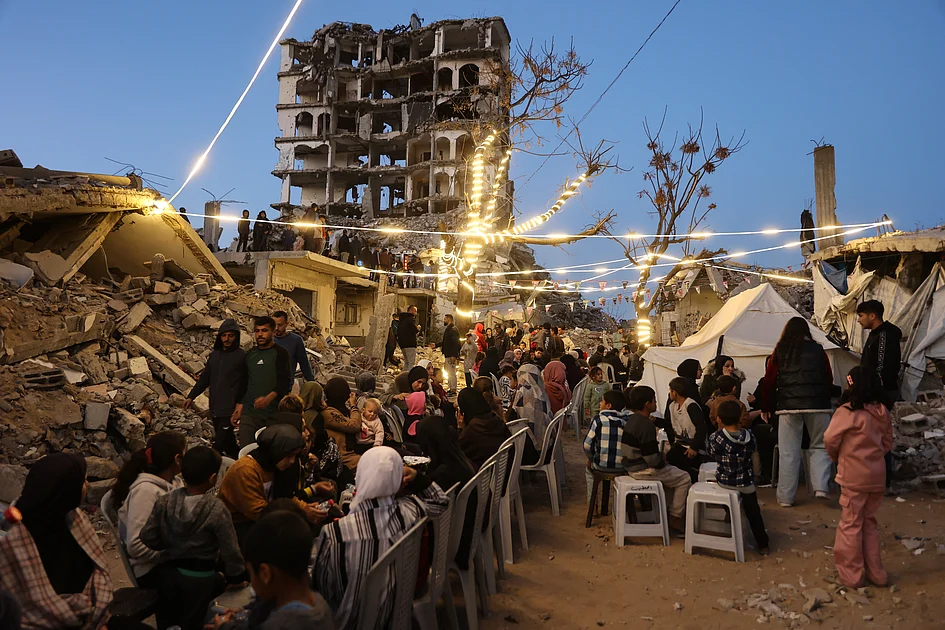
In the war-ravaged landscape of Gaza, Palestinian families are observing the holy month of Ramadan under extraordinarily dire circumstances. Instead of gathering in comfortable homes adorned with festive decorations, many are breaking their fasts amidst the skeletal remains of their destroyed residences, creating a stark contrast between spiritual devotion and physical devastation.
The traditional iftar meal, typically a joyful communal celebration, now takes place in bombed-out buildings and makeshift shelters. Families sit on rubble-strewn floors where their living rooms once stood, sharing whatever simple provisions they can secure amidst severe supply shortages. The sounds of prayer and Quranic recitation echo through hollowed-out structures that bear witness to recent conflict.
Humanitarian conditions remain critically strained throughout the region, with limited access to essential supplies including food, clean water, and medical resources. International aid organizations report significant challenges in delivering assistance to those most affected by the ongoing crisis. Despite these hardships, the community demonstrates remarkable resilience, maintaining religious traditions and finding moments of unity amid the destruction.
The psychological impact of observing this sacred period without basic security or adequate nourishment presents profound challenges for Gaza’s population. Community leaders emphasize the spiritual significance of perseverance during hardship, while medical professionals express concern about the combined effects of malnutrition, stress, and trauma on the physical and mental health of residents, particularly children and the elderly.