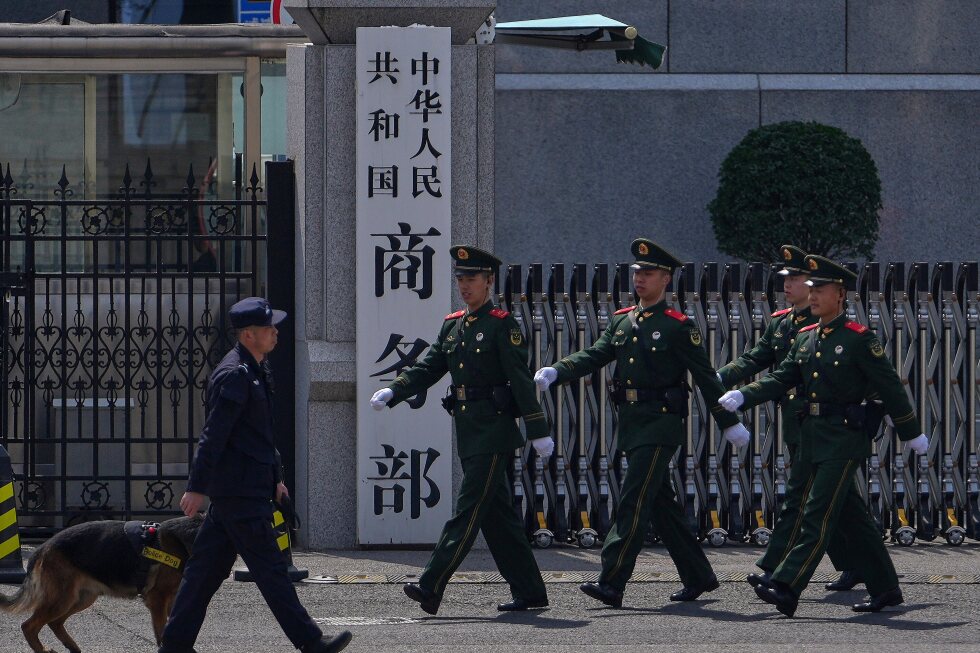
China’s Commerce Ministry announced sweeping export control measures targeting 40 Japanese companies on Tuesday, escalating economic tensions following controversial remarks by Japan’s Prime Minister regarding Taiwan. The measures divide affected companies into two distinct categories: 20 entities face complete bans on receiving dual-use technologies from Chinese suppliers, while another 20 require enhanced licensing procedures for such transactions.
The comprehensive restrictions specifically prohibit Chinese exporters from selling dual-use goods—items with both civilian and military applications—to prominent Japanese industrial leaders. The blacklist includes multiple subsidiaries of Mitsubishi Heavy Industries engaged in shipbuilding, aircraft engine production, and maritime machinery manufacturing, alongside divisions of Kawasaki Heavy Industries and technology giant Fujitsu.
A secondary watchlist mandates that Chinese exporters submit detailed export license applications, comprehensive risk assessment reports, and written guarantees that dual-use items won’t be diverted to military purposes. This list features Subaru Corporation, Mitsubishi Materials Corporation, and the prestigious Institute of Science Tokyo among others.
Chinese authorities characterized these measures as targeted responses to Japan’s perceived remilitarization ambitions and nuclear proliferation concerns. The Ministry emphasized that these actions represent “legitimate, reasonable, and legal” safeguards that won’t impact normal Sino-Japanese economic relations. Officials reassured that compliant Japanese businesses need not worry about disruptions to legitimate trade activities.
The diplomatic friction stems from November comments by Japanese Prime Minister Sanae Takaichi, who suggested potential military intervention should China attempt to annex Taiwan. Beijing considers Taiwan a breakaway province and maintains the right to use force for reunification, consistently opposing any international recognition of Taiwanese sovereignty.
The export controls arrive shortly after Takaichi’s party secured a decisive parliamentary victory, enabling further implementation of conservative policies regarding national security and immigration. This development marks the latest chapter in increasingly complex Sino-Japanese relations, where economic interdependence coexists with deepening geopolitical tensions.