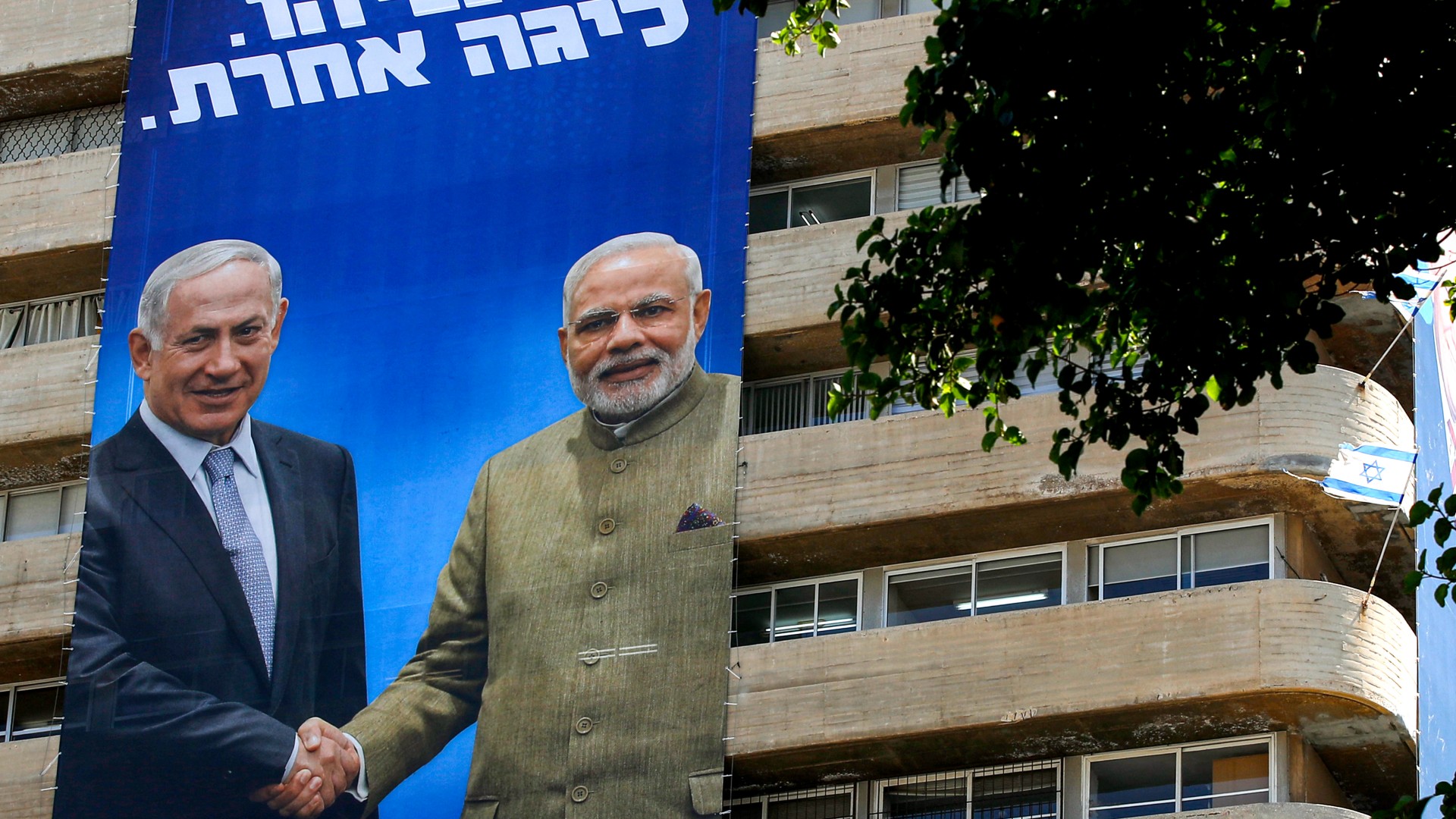
Indian Prime Minister Narendra Modi’s upcoming two-day visit to Israel marks a significant moment in the deepening strategic partnership between the two nations. The visit, described by Israeli Prime Minister Benjamin Netanyahu as highlighting a “special relationship,” comes at a critical juncture in Middle Eastern geopolitics, with escalating tensions with Iran and ongoing conflict in Gaza.
The relationship between India and Israel has evolved substantially since Netanyahu’s landmark 2017 visit to India, which established the countries as strategic partners in water and agriculture. Modi’s current visit represents a continuation of this growing alliance, particularly in defense and technology sectors.
Over the past decade, India has emerged as the largest purchaser of Israeli weapons systems, with defense purchases increasing by 175% between 2015-2019. The partnership extends beyond mere transactions to include co-production agreements and technology transfer, supporting Modi’s “Make in India” initiative for military modernization and indigenous manufacturing.
The timing of the visit is strategically significant for both leaders. Netanyahu faces elections in nine months and benefits from demonstrating strong international alliances, while Modi reinforces his global stature and strategic outreach to the Global South. The visit includes addressing the Israeli Knesset—an honor reserved for special guests—and meetings focused on technology innovation in Jerusalem.
Notably absent from the itinerary are visits to occupied Palestinian territories, reflecting India’s policy under Modi to “de-hyphenate” Israel and Palestine relations, despite India’s official commitment to a two-state solution.
The countries recently signed a Bilateral Investment Agreement aimed at protecting mutual investments and advancing broader economic integration. Discussions during the visit are expected to focus on expanding cooperation in intelligence, weapons development, anti-ballistic missile systems, and emerging technologies including artificial intelligence and quantum computing.
Netanyahu has articulated a vision of forming a “hexagon” of alliances involving India, Arab nations, African countries, Mediterranean states, and Asian partners, seen as an effort to create a pro-Western, anti-Iran economic and strategic bloc building on the India-Middle East-Europe Economic Corridor.
While the visit has been celebrated in mainstream Indian media, it has also prompted concerns and protests from Palestinian advocates within India, met with government crackdowns. The opposition Indian National Congress has criticized the lack of transparency surrounding the visit rather than the substance of the relationship itself.