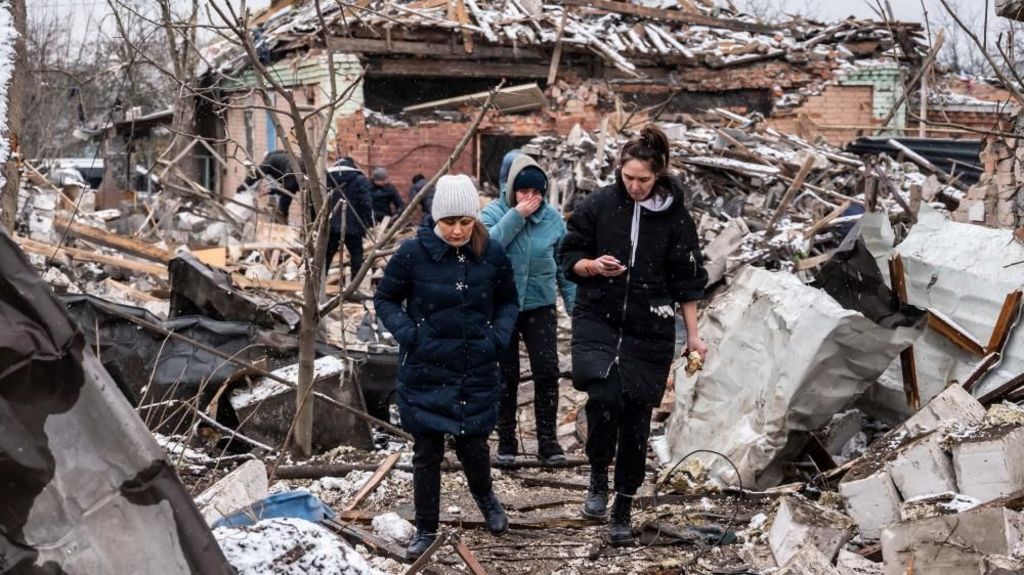
Four years after Russian President Vladimir Putin initiated Europe’s largest military offensive since World War Two, the conflict in Ukraine remains entrenched in a devastating stalemate. The initial February 2022 invasion, intended to swiftly seize Kyiv and topple the pro-Western government, has instead resulted in a protracted war of attrition, with approximately one-fifth of Ukrainian territory under Russian control.
The geopolitical struggle is rooted in Putin’s longstanding rejection of Ukrainian sovereignty. Historical revisionism has been a central tenet of the Kremlin’s justification, with baseless allegations of Nazi influence and genocide used to legitimize the invasion. This narrative directly contradicts reality: President Volodymyr Zelensky is Jewish, with family members who perished in the Holocaust, and no far-right parties hold seats in Ukraine’s parliament.
Diplomatic efforts to resolve the conflict have repeatedly faltered. Despite US President Donald Trump’s push for a settlement—including a high-profile August meeting with Putin in Alaska and subsequent trilateral negotiations in early 2026—fundamental disagreements persist. Moscow demands international recognition of its territorial acquisitions, including Crimea and four eastern regions annexed through sham referendums, while insisting on Ukraine’s permanent neutrality and abandonment of NATO aspirations. These conditions remain unacceptable to Kyiv, which seeks security guarantees against future Russian aggression.
The human cost continues to mount dramatically. Conservative estimates suggest over 92,000 Ukrainian military casualties and at least 14,500 civilian deaths, though actual figures are likely substantially higher. Russian military losses are estimated between 243,000-352,000. The economic impact on both nations is severe, with Russia dedicating over 33% of its federal budget to defense and Ukraine suffering catastrophic infrastructure damage and industrial disruption.
As the conflict enters its fifth year with no clear military resolution in sight, the prospects for a negotiated settlement appear increasingly remote, leaving millions displaced and a nation’s sovereignty hanging in the balance.