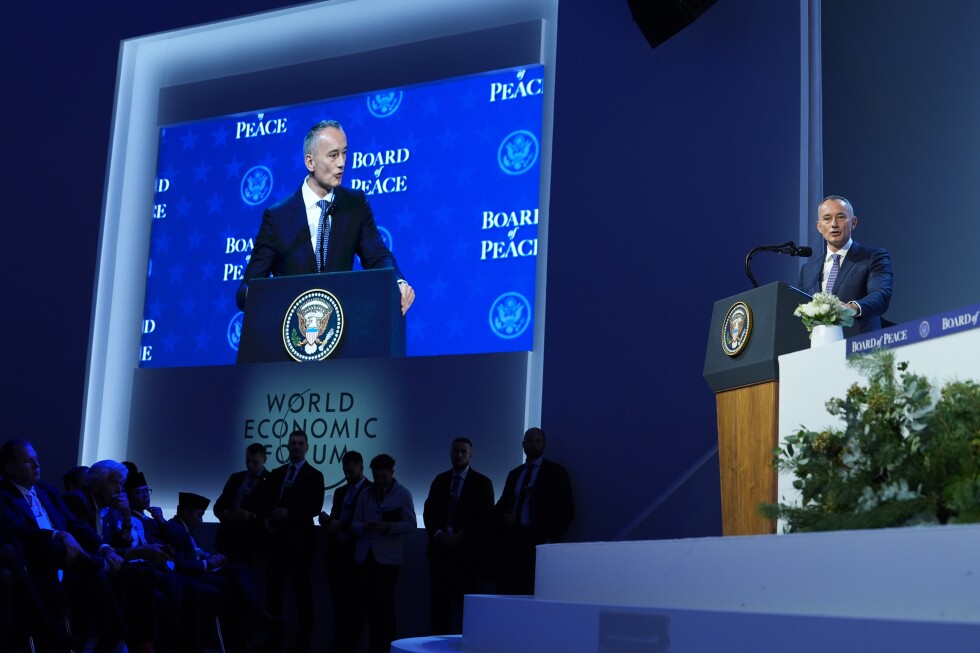
European Union foreign ministers convened in Brussels on Monday for crucial discussions with Nikolay Mladenov, Director of the U.S.-backed Board of Peace, highlighting deep divisions within the bloc regarding cooperation with President Donald Trump’s initiative for Gaza’s stabilization and reconstruction. The meeting with Mladenov—a former Bulgarian politician and UN diplomat appointed by Trump—comes amid escalating tensions over the EU’s appropriate role in Middle East peacemaking.
The gathering, attended by EU foreign policy chief Kaja Kallas and ministers from across the 27-nation union, also addressed ongoing concerns about the war in Ukraine and potential new sanctions against Russia. The EU’s substantial geopolitical and economic interests in the Mediterranean region position it as a critical stakeholder, with the bloc currently maintaining oversight operations at the Rafah border crossing and serving as the primary donor to the Palestinian Authority.
Internal divisions have emerged sharply across European capitals regarding collaboration with the Trump-led board. While EU members Hungary and Bulgaria hold full membership, and candidate countries Turkey, Kosovo, and Albania participate fully, twelve additional EU nations dispatched observers to the Washington inaugural meeting: Austria, Croatia, Cyprus, Czech Republic, Finland, Germany, Greece, Italy, Netherlands, Poland, Romania, and Slovakia.
Notable absences included French President Emmanuel Macron, European Commission President Ursula von der Leyen, and Pope Leo XIV, who declined invitations. However, von der Leyen’s decision to send European Commissioner for the Mediterranean Dubravka Šuica as an observer without consulting the European Council sparked institutional controversy. French Foreign Minister Jean-Noël Barrot publicly criticized this move as a violation of EU regulations, stating on social media platform X that the Commission ‘must scrupulously respect European law and institutional balance in all circumstances.’
In response, von der Leyen’s spokesperson Paula Pinho defended the Commission’s prerogative to accept invitations independently, emphasizing that while the executive branch isn’t formally joining the board, it seeks to influence Gaza’s reconstruction and peacekeeping efforts beyond its financial contributions.
The Trump administration’s expansive vision for the Board of Peace encompasses everything from transforming Gaza into a futuristic metropolis to challenging the UN Security Council’s traditional conflict-resolution role. However, these ambitions face practical constraints given the limited progress achieved thus far in implementing the ceasefire’s fundamental objectives.