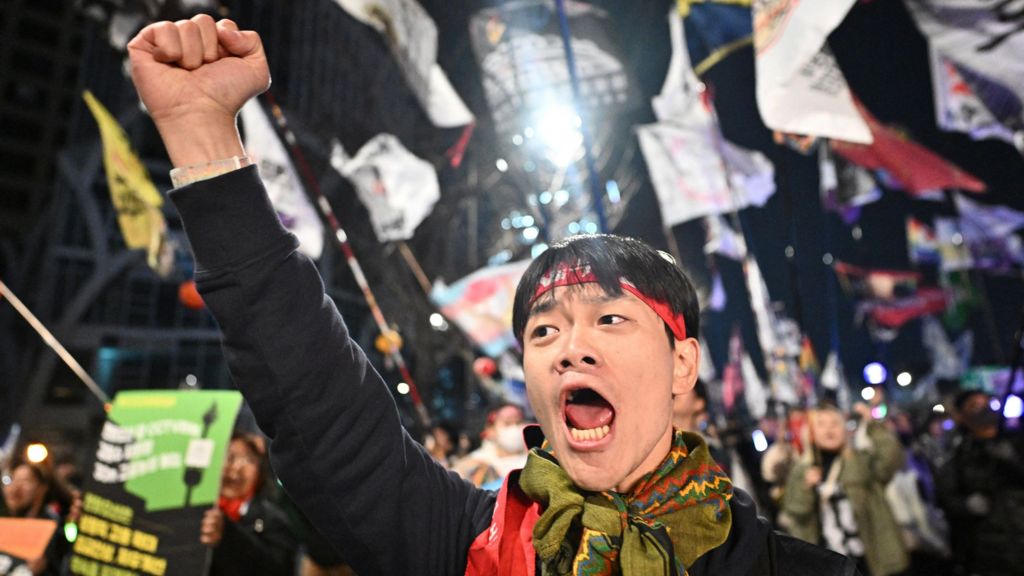
In a landmark verdict demonstrating democratic accountability, South Korea’s former President Yoon Suk Yeol has been sentenced to life imprisonment for orchestrating a failed insurrection attempt in December 2024. The Seoul High Court’s decisive ruling caps a dramatic 14-month period that began when Yoon declared martial law on national television, claiming unspecified “anti-state forces” had infiltrated the country.
The attempted power grab unraveled within hours as citizens defied curfews and thousands gathered at the National Assembly in subzero temperatures. In an extraordinary display of democratic solidarity, 190 lawmakers breached police barricades to convene an emergency session that unanimously rejected the martial law declaration. By 1:00 AM, just six hours after Yoon’s announcement, the insurrection had collapsed.
Stanford University’s Korea Program Director Gi-Wook Shin notes this episode represents “a rare example of democratic resilience” amid global democratic fragility. “The rapid response from the National Assembly, courts, media, and civil society demonstrates that democratic safeguards are robust and effective,” Shin told the BBC.
The failed coup attempt triggered mass protests that transcended generational divides. Older Koreans, recalling the nation’s authoritarian past under Park Chung Hee and Chun Doo Hwan, recognized the patterns of historical oppression. Younger citizens, though initially confused, quickly mobilized through digital networks. Their collective action led to Yoon’s impeachment within ten days and his arrest on January 3, 2025.
Despite the successful defense of democracy, the episode exposed deep political fractures. Approximately 27% of Koreans maintain Yoon’s innocence, with supporters expressing “deep disappointment” at the verdict. The former president tapped into existing anxieties, particularly among young men, amplifying conspiracy theories about political opponents colluding with foreign powers.
Yoon faces additional trials related to the insurrection attempt and separate corruption charges. While eligible for presidential pardon, the ruling party is advancing legislation to block this possibility. The case establishes a significant precedent for holding leaders accountable and demonstrates how institutional checks and citizen participation can preserve democratic norms against authoritarian threats.