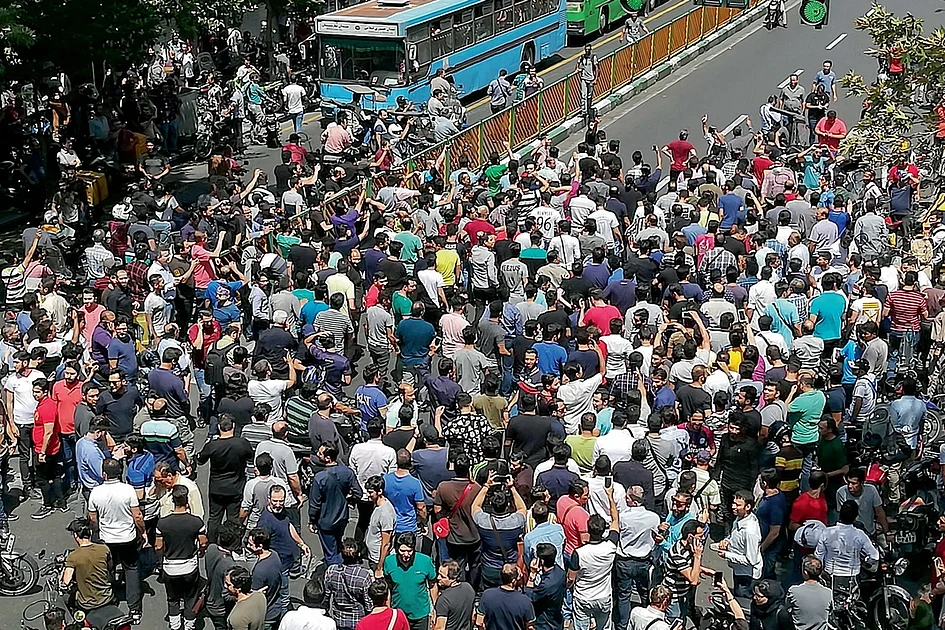
Tehran’s university campuses transformed into arenas of ideological conflict on Sunday as Iranian students engaged in a second consecutive day of dueling demonstrations. The protests, marking the 40-day mourning period for victims of January’s violent unrest, revealed deepening societal fractures with both pro-government and anti-establishment factions holding simultaneous rallies.
According to state-affiliated Fars news agency, significant tensions emerged at multiple academic institutions across the capital, particularly at the prestigious Sharif University of Technology. Videos verified by international media outlets depicted extraordinary scenes of students waving the banned flag of Iran’s pre-1979 monarchy featuring the lion and sun emblem, while chanting provocative slogans including ‘long live the shah’ and other anti-government rhetoric.
The demonstrations originated from December’s economic protests but have dramatically evolved into broader challenges against Iran’s clerical establishment. Competing groups faced off across campuses, with uniformed security personnel frequently intervening to separate opposing factions. Open clashes were documented in circulated videos, showing physical altercations breaking out between demonstrators.
Iran’s official narrative maintains that approximately 3,000 casualties occurred during recent unrest, attributing violence to ‘terrorist acts’ allegedly sponsored by foreign adversaries. However, independent monitoring by the US-based Human Rights Activists News Agency (HRANA) suggests a significantly higher death toll exceeding 7,000 individuals, predominantly comprising protesters.
The sustained campus activism represents a particularly sensitive challenge for Iranian authorities, as student movements have historically served as catalysts for broader political change. The current protests notably incorporate symbolic elements from Iran’s monarchical past, suggesting an expansion of dissident rhetoric beyond immediate economic grievances toward more fundamental challenges to the Islamic Republic’s ideological foundation.