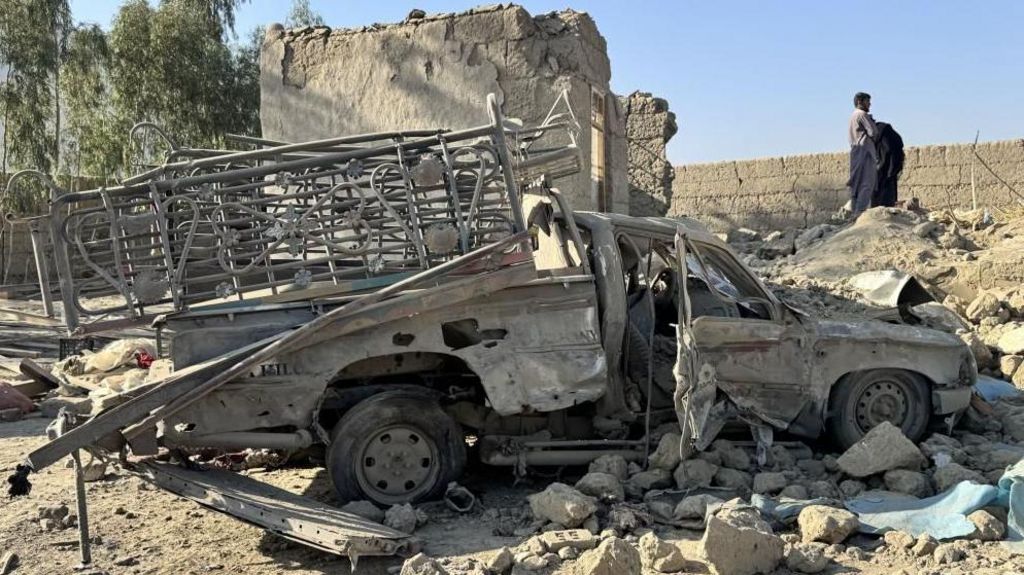
In a significant escalation of cross-border tensions, Pakistan conducted a series of overnight airstrikes targeting multiple locations within Afghanistan’s eastern provinces. The operation, described by Islamabad as “intelligence-based selective targeting,” focused on seven alleged militant camps and hideouts near the volatile Pakistan-Afghanistan border region.
Afghan Taliban authorities reported devastating civilian casualties, with officials in Nangarhar province stating that one strike alone destroyed the home of Shahabuddin, killing approximately 20 family members including women and children. The Taliban’s defense ministry confirmed attacks on civilian areas in both Nangarhar and Paktika provinces, characterizing the operation as a “blatant violation of Afghanistan’s territorial integrity” and a “clear breach of international law.”
Pakistan’s Ministry of Information and Broadcasting justified the strikes as a “retributive response” to recent suicide bombings on Pakistani soil, specifically referencing an attack on a Shia mosque in Islamabad earlier this month and multiple incidents in Khyber Pakhtunkhwa province since the beginning of Ramadan. The statement identified targets as members of the banned Tehreek-i-Taliban Pakistan (TTP)—referred to by the government as “Fitna al Khawarij”—along with their affiliates and Islamic State-Khorasan Province elements.
Islamabad presented what it called “conclusive evidence” that recent attacks in Pakistan were orchestrated by militant leadership based in Afghanistan, accusing the Afghan Taliban administration of failing to take meaningful action against these groups despite previous agreements.
The Taliban administration issued a stern warning through its defense ministry, stating that “an appropriate and measured response will be taken at a suitable time” and criticizing Pakistan’s military intelligence capabilities. This development comes just days after Saudi Arabia mediated the release of three Pakistani soldiers captured during border clashes last October, which had previously resulted in a tentative ceasefire agreement—the first since the Taliban returned to power in 2021.
The 1,600-mile mountainous border between the two nations remains a persistent flashpoint, with this latest incident representing the most serious breach of the fragile October ceasefire agreement to date.