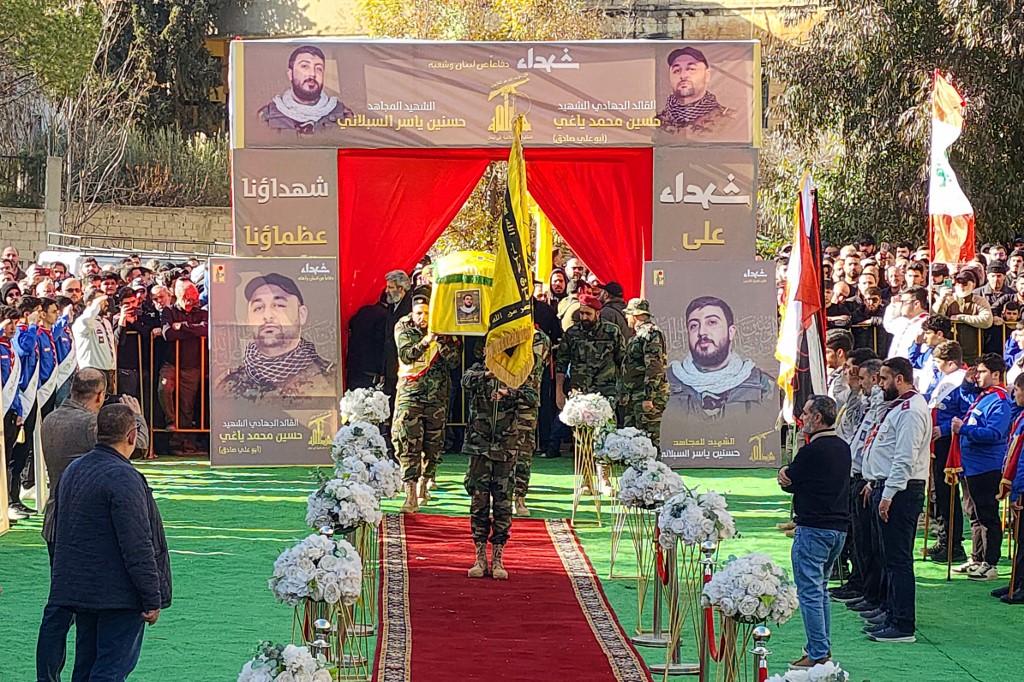
Hezbollah has declared it possesses ‘no remaining alternatives’ but to engage in self-defense following Israel’s most lethal aerial assault in weeks on eastern Lebanon. The Friday strikes targeted the Bekaa Valley, resulting in a minimum of ten fatalities—including a high-ranking Hezbollah military official—and wounding twenty-four individuals, among them three children. This offensive represents a direct violation of the November 2024 ceasefire agreement.
In a televised address on Hezbollah’s Al-Manar network, Mahmoud Qamati, deputy chairman of the group’s political council, condemned the operation as ‘a new massacre and a new aggression.’ He posed the rhetorical question, ‘What option do we have left to defend ourselves and our country? What option do we have other than resistance?’
This escalation coincides with intelligence reports from Al Arabiya and Al Hadath indicating Hezbollah has intensified its strategic planning sessions. These meetings are reportedly focused on formulating a response to a potential military confrontation between the United States and Iran. According to sources, Iranian commanders from the Islamic Revolutionary Guard Corps (IRGC) have now assumed administrative oversight, effectively supplanting elements of the Lebanese leadership.
While some Iranian military advisors have been stationed in Lebanon for several months, additional personnel have recently arrived as U.S.-Iran tensions have worsened. Several high-level discussions have specifically concentrated on Hezbollah’s missile capabilities in the Bekaa Valley—the precise unit struck by Israeli forces. The Iranian commanders are now directing efforts to rebuild Hezbollah’s operational capacity while preparing for what they perceive as an inevitable broader conflict with Israel.
Concurrently, The New York Times reports the Pentagon has relocated hundreds of U.S. troops from bases in Qatar and Bahrain. This repositioning accompanies a substantial deployment of military assets to the region, including warships, fighter jets, bombers, drones, surveillance aircraft, and advanced air-defense systems. These movements suggest Washington is preparing for a prolonged engagement potentially exceeding the duration of last year’s 12-day conflict.
Katherine Thompson of the Cato Institute, a former senior Defense Department official, observed, ‘This looks like positioning for a much longer conflict.’ She noted the Pentagon appears to be ‘anticipating an Iranian response that could pose a significant risk to American bases in the region,’ while expressing concerns about the sustainability of prolonged force protection alongside continued support for Israel. Another U.S. military official confirmed two aircraft carriers remain strategically positioned at a distance from Iran to safeguard American installations.