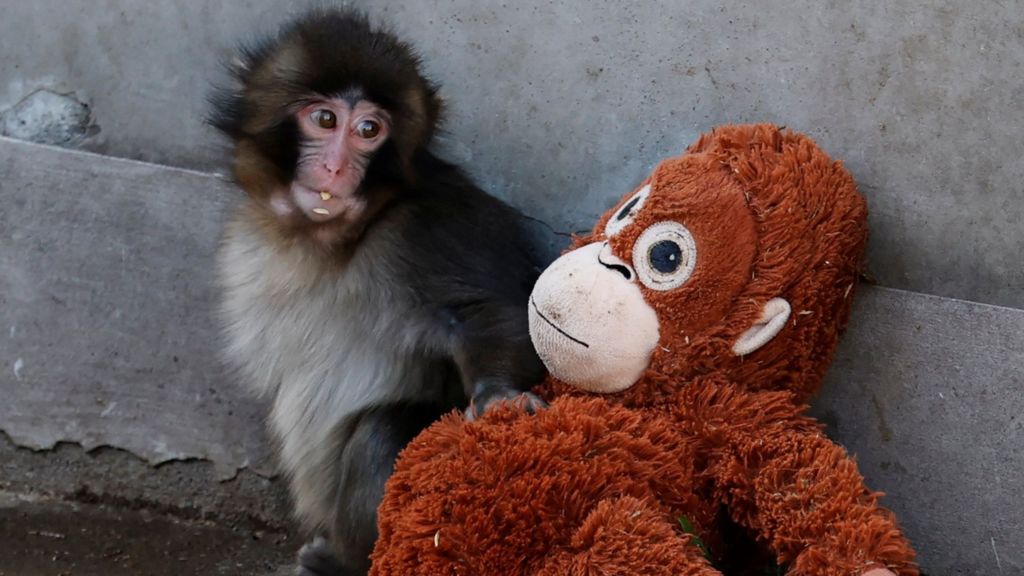
A heartwarming narrative of interspecies compassion has emerged from Japan’s Ichikawa City Zoo, where a young Japanese macaque rejected by his biological mother has formed an extraordinary bond with an inanimate companion. The juvenile primate, whose early life was marked by maternal abandonment, has been provided with a carefully selected stuffed orangutan by attentive zookeepers seeking to address his emotional needs.
This unconventional pairing has evolved into an international sensation after zoo visitors documented and shared footage capturing the monkey’s intricate interactions with his plush surrogate. The viral videos reveal astonishing behavioral patterns as the macaque engages in behaviors ranging from gentle grooming sessions to playful ambushes, demonstrating what primate experts identify as transference of natural social behaviors onto the artificial companion.
Animal behavioral specialists observing the phenomenon note that such therapeutic interventions represent significant advancements in zookeeping practices, particularly regarding emotional support for socially deprived primates. The stuffed orangutan, selected for its size and texture similarities to actual primates, serves as an enrichment tool that provides continuous comfort while allowing the development of crucial social skills that may facilitate future integration with conspecifics.
The global response has highlighted growing public fascination with animal emotional intelligence, with the zoo reporting increased visitor numbers and international inquiries about the primate’s wellbeing. This incident has simultaneously sparked broader conversations about ethical animal management and the psychological complexities of non-human species in captive environments.