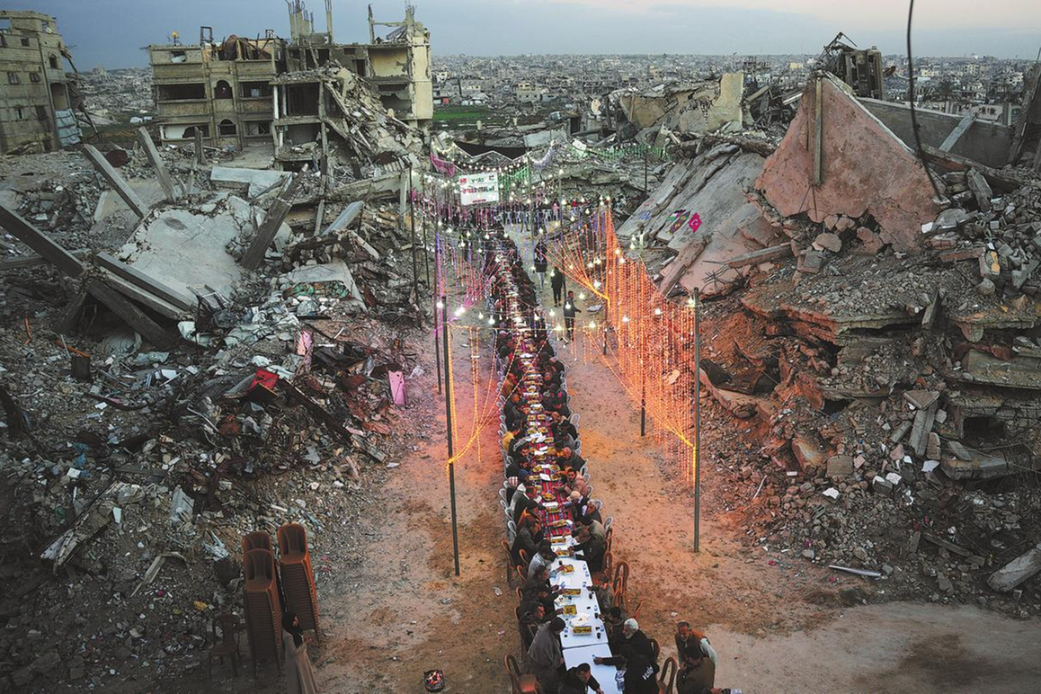
As the inaugural session of the US-initiated ‘Board of Peace’ commenced in Washington, residents of Gaza voiced profound concerns about their exclusion from critical discussions determining their future. The council, established following Qatari and Egyptian-mediated ceasefire negotiations that halted the Palestine-Israel conflict in October, has expanded its original mandate from overseeing truce implementation and reconstruction to addressing broader international disputes.
The meeting gathered approximately two dozen global leaders and senior officials who deliberated on the fragile second phase of the ceasefire, financial commitments, and proposals for an international stabilization force. Despite these high-level discussions, Gazans expressed apprehension that decisions made thousands of miles away would fail to address their immediate needs amid the widespread devastation that has left the territory in ruins after two years of conflict.
Mohammed Abdel-Majid, a 37-year-old displaced Palestinian in Deir al-Balah, articulated the prevailing sentiment: ‘If this council brings real calm and improves our situation, we welcome any effort. But the absence of Palestinian representation worries us. How can they understand our needs when they do not live what we live every day?’
Although a 15-member Palestinian technocratic committee has been formed to manage Gaza’s daily governance under the board’s supervision, this arrangement has done little to alleviate concerns about practical implementation and fair representation. Safaa Yassin, a 40-year-old Gaza City resident, noted the history of unfulfilled promises: ‘We have witnessed many pledges, and each time there was talk of solutions—but without implementation and without our lives changing for the better.’
The initiative faced additional complications as Norway explicitly rejected US claims of its participation. Norwegian Foreign Ministry spokeswoman Ane Jorem stated unequivocally that her country would not join the board, a position shared by several European nations including France, Germany, and the United Kingdom. French officials expressed surprise at the European Commission’s attendance, noting it lacked authorization from the European Council.
Meanwhile, Morocco became the first Arab nation to commit personnel to the proposed International Stabilization Force, while Indonesia offered 8,000 troops—nearly half the 20,000 sought. Hamas spokesperson Hazem Qassem emphasized that any political arrangements must begin with ‘a complete cessation of aggression, lifting the blockade, and guaranteeing the legitimate national rights of our people.’