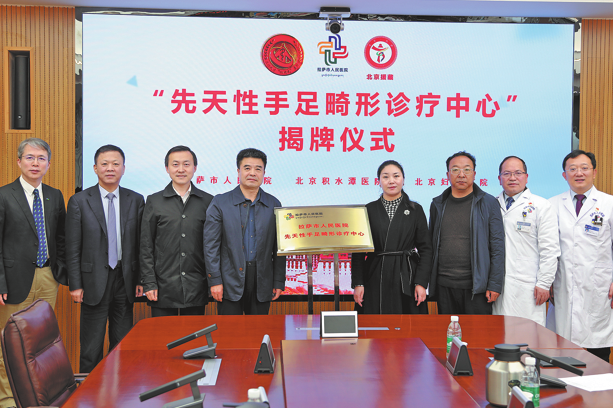
In the challenging high-altitude environment of Tibet, where oxygen-thin air complicates medical procedures and geographic isolation limits healthcare access, a revolutionary transformation is underway at Lhasa People’s Hospital. Dr. Zhang Ning, an obstetrics and gynecology specialist from Beijing’s Capital Medical University, arrived in July 2024 as part of China’s eastern-western hospital pairing initiative, bringing with him a vision to permanently elevate healthcare standards in the region.
The high-altitude environment presents unique medical challenges, with reduced oxygen levels affecting everything from emergency response times to postoperative recovery. Historically, Tibetan residents requiring advanced medical care faced arduous journeys outside the region. Dr. Zhang’s mission addresses this disparity through a dual approach: implementing immediate clinical improvements while establishing sustainable systems that will endure beyond external support.
Central to Zhang’s strategy is what he terms the ‘hematopoiesis model’ – creating self-renewing capability within the local healthcare system. This approach has materialized through a comprehensive mentorship program connecting twelve leading Beijing medical institutions with Lhasa People’s Hospital. The initiative facilitates knowledge transfer through direct collaboration between Tibetan medical professionals and experienced specialists from China’s capital.
A landmark achievement of this program emerged from the gastroenterology department, where a local physician became the hospital’s first home-trained PhD under the guidance of Liu Kuiliang from Beijing Friendship Hospital. This milestone exemplifies the program’s success in developing local expertise that remains within the community.
Beyond technical training, Zhang recognized that cultural integration was essential for sustainable reform. He learned basic Tibetan phrases including greetings and expressions of gratitude, gestures that significantly bridged cultural divides and built trust among local staff. Tenzin Yangdron, a Tibetan nurse at the facility, noted that Zhang’s leadership style combines direct problem-solving with mentorship, citing his personal intervention to resolve equipment installation delays rather than relying solely on directives.
The May 2025 inauguration of the Medical Diagnosis and Treatment Center for Congenital Hand and Foot Deformities stands as a testament to these efforts, representing both immediate healthcare improvement and long-term capacity building. Zhang emphasizes that the ultimate goal transcends temporary assistance: ‘We want to equip local practitioners with the skills and confidence to lead, innovate, and deliver top-quality care for their communities.’ This comprehensive approach ensures that medical advancements will continue benefiting Tibetan residents long after external support transitions.