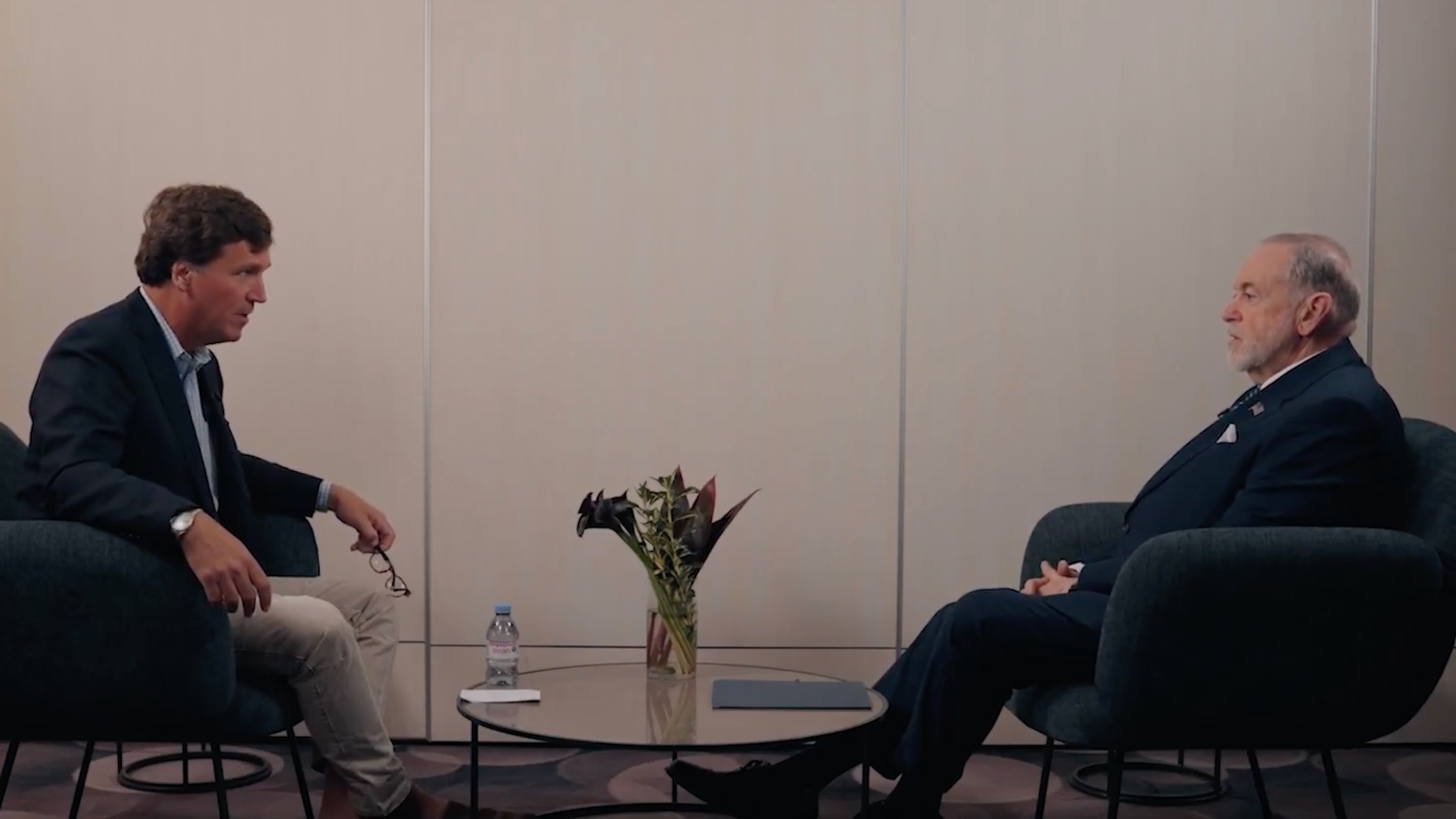
In a televised exchange that has ignited significant controversy, US Ambassador to Israel Mike Huckabee engaged in a theological and geopolitical debate with conservative commentator Tucker Carlson regarding Israel’s territorial rights. The discussion, aired on Friday’s episode of The Tucker Carlson Show, centered on biblical interpretations of land promised to the Jewish people.
Carlson directly questioned Huckabee about the boundaries described in Genesis 15, which references territory spanning from the Nile to the Euphrates rivers—encompassing approximately five modern nations alongside currently occupied Palestinian territories. When pressed on whether Israel held divine entitlement to this extensive region, Huckabee responded that “it would be fine if they took it all,” though he subsequently characterized this as “somewhat of a hyperbolic statement.
The ambassador later clarified his position, asserting that Israel seeks only to protect its citizens rather than actively conquer neighboring states. However, he notably added that if Israel were attacked and subsequently victorious in such conflicts, the acquisition of additional territory would become “a whole other discussion.”
This exchange occurs against the backdrop of Huckabee’s June statements to Bloomberg News, where he declared that establishing a Palestinian state in the occupied West Bank no longer represents US policy objectives. The ambassador suggested instead that Israel’s “Muslim neighbours” might surrender land to facilitate Palestinian statehood.
The interview concluded with unexpected consequences for Carlson’s production team. Following his sit-down with Huckabee in Israel, Carlson reported that Israeli security officials detained him and confiscated passports, questioning his executive producer about the interview’s content. Carlson subsequently criticized both Israeli authorities and the American embassy for their handling of the incident, asserting that American citizens cannot expect their government to prioritize their interests over those of the Israeli government.
The full 165-minute interview, released Friday, has sparked renewed debate about Christian Zionism, US foreign policy in the Middle East, and the appropriate role of religious texts in modern geopolitical discourse.