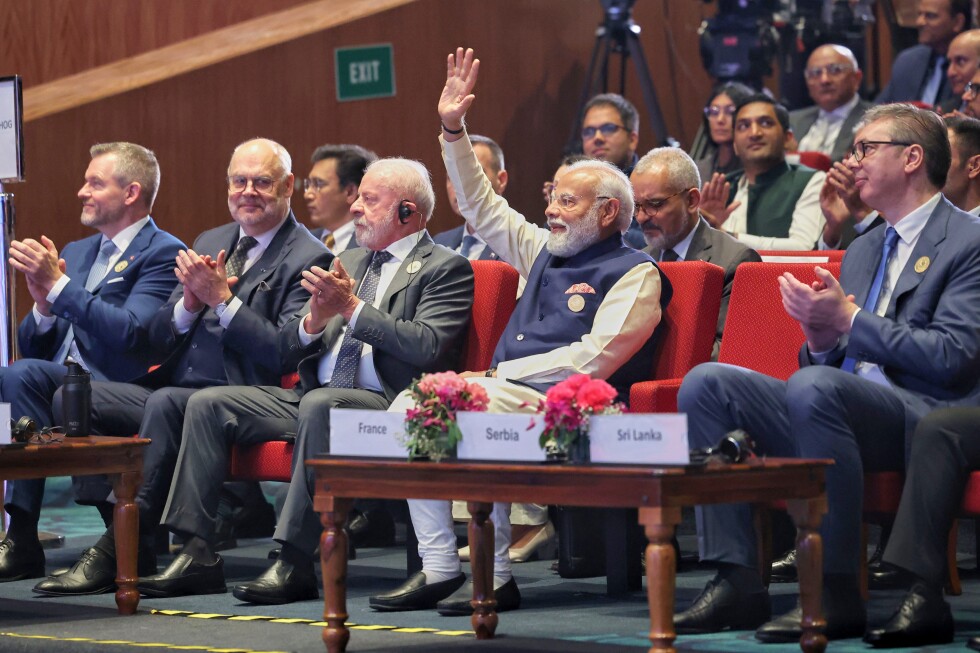
Indian Prime Minister Narendra Modi has declared India’s ambition to become a pivotal force in the worldwide artificial intelligence landscape, emphasizing a strategy of domestic development coupled with global implementation. Addressing the India AI Impact Summit in New Delhi on Thursday, Modi articulated his vision before an assembly of international leaders, technology executives, and policy makers with the mantra: “Design and develop in India. Deliver to the world. Deliver to humanity.
This declaration comes as the rapidly expanding digital market seeks to capitalize on its extensive experience in constructing large-scale digital public infrastructure. India aims to establish itself as an economically viable center for AI innovation, leveraging successful models like its digital identification and online payment systems as templates for affordable AI deployment, especially in developing nations.
The high-profile gathering featured addresses from French President Emmanuel Macron, Google CEO Sundar Pichai, and UN Secretary-General António Guterres, who proposed a $3 billion international fund to enhance AI capabilities in less affluent countries. Guterres emphasized that AI development must not be dominated by a limited number of nations or wealthy individuals, asserting that the technology should “belong to everyone.”
India is strategically positioning itself as a connecting link between advanced economies and the Global South, with Modi stressing the necessity to “democratize AI” and transform it into an instrument for inclusion and empowerment. The country’s nearly one billion internet users make it an essential market for international tech corporations expanding their AI operations.
Significant investments have been announced, including Microsoft’s $17.5 billion commitment over four years to enhance cloud and AI infrastructure, Google’s $15 billion five-year investment featuring plans for India’s first AI hub, and Amazon’s $35 billion pledge by 2030 focused on AI-driven digitization.
Despite these ambitions, India faces substantial challenges in developing its own large-scale AI models comparable to U.S.-based OpenAI or China’s DeepSeek. Obstacles include restricted access to advanced semiconductor chips, insufficient data center infrastructure, and the complexity of training AI systems on hundreds of local languages.
The summit encountered organizational difficulties throughout the week, beginning with logistical problems that resulted in extended waiting times and reports of stolen items, though organizers later confirmed recovery of the missing property. Further complications emerged when a private Indian university was removed from the event after presenting a commercially available Chinese robotic dog as their own innovation. The setbacks continued with the unexpected withdrawal of Microsoft co-founder Bill Gates from his scheduled keynote address, with the Gates Foundation citing a desire to maintain focus on the summit’s primary objectives, amid ongoing questions regarding Gates’ associations with the late financier and convicted sex offender Jeffrey Epstein.