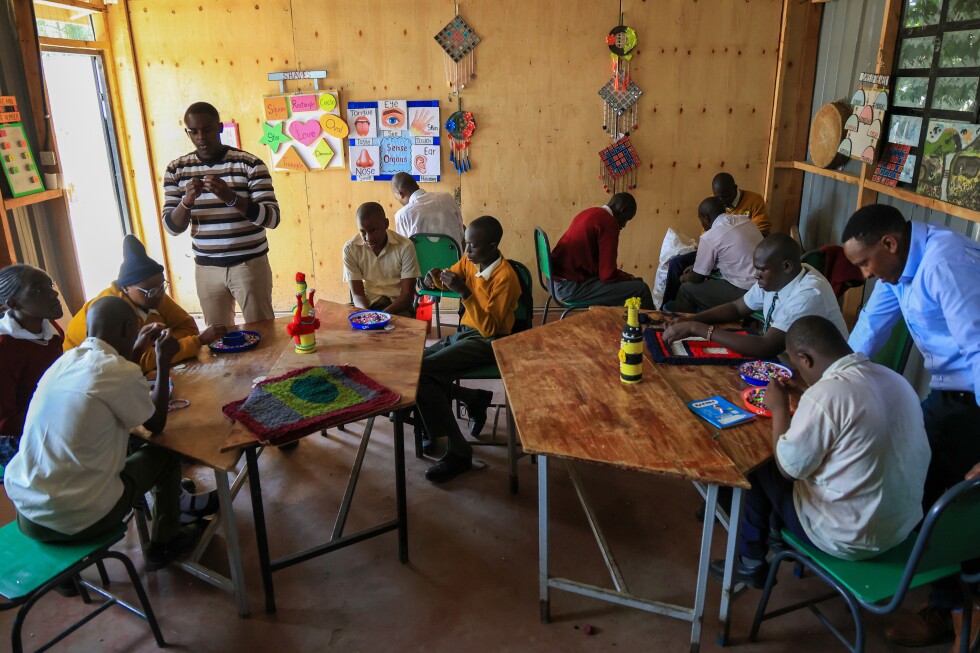
In the Kenyan town of Kitengela, an innovative educational institution is transforming the learning experience for students with dyslexia through specialized teaching methodologies. Rare Gem Talent School has developed a unique educational framework that replaces traditional lecture-based instruction with multi-sensory techniques specifically designed for neurodiverse learners.
The school addresses a critical gap in Kenya’s educational landscape, where despite significant improvements in general education access, students with learning disabilities frequently struggle within conventional systems. Dyslexia affects approximately 10% of learners nationwide, creating substantial barriers to literacy development and academic achievement.
Educational specialists at Rare Gem employ what they term a ‘multi-sensorial approach’ to reading instruction. This methodology incorporates visual techniques such as color-coding word sounds, auditory methods including musical spelling patterns, and tactile learning using physical objects to represent word construction. “You teach step by step until the learner comprehends the material, moving beyond the traditional teacher-centered lecture model,” explained Dorothy Kioko, an educator at the institution.
Founded in 2012 through the Dyslexia Organisation Kenya, the school began with fewer than ten students and has expanded to serve approximately 210 learners today. While primarily focused on dyslexia, the institution also accommodates students with other learning challenges including autism spectrum disorders.
The school’s founder, Phyllis Munyi, established Rare Gem after witnessing the educational struggles of her own son with dyslexia. “Early identification and intervention are crucial,” Munyi emphasized. “With proper support, these students can develop their skills, discover their talents, and complete their education successfully.
Despite Kenya’s remarkable progress in educational access—with primary school enrollment increasing from 5.9 million in 2002 to 10.2 million in 2023—special needs education has lagged considerably. Official statistics indicate that while 11.4% of Kenyan children have special educational requirements, only 250,000 such students are currently enrolled in appropriate educational programs.
Rare Gem offers a potentially scalable model for inclusive education, utilizing a modified version of Kenya’s standard curriculum rather than creating an entirely separate educational framework. The school charges $180 per term, making it more affordable than elite private institutions while remaining financially inaccessible to many Kenyan families compared to government schools.
Significant challenges remain, including persistent social stigma, limited parental awareness, and the traumatic impact of bullying that many students experienced in previous educational settings. Former student Geoffrey Karani, now an art teacher at the school, noted: “In conventional schools, there was extensive discrimination and bullying. Now I mentor students by showing them I’ve traveled the same difficult journey.”