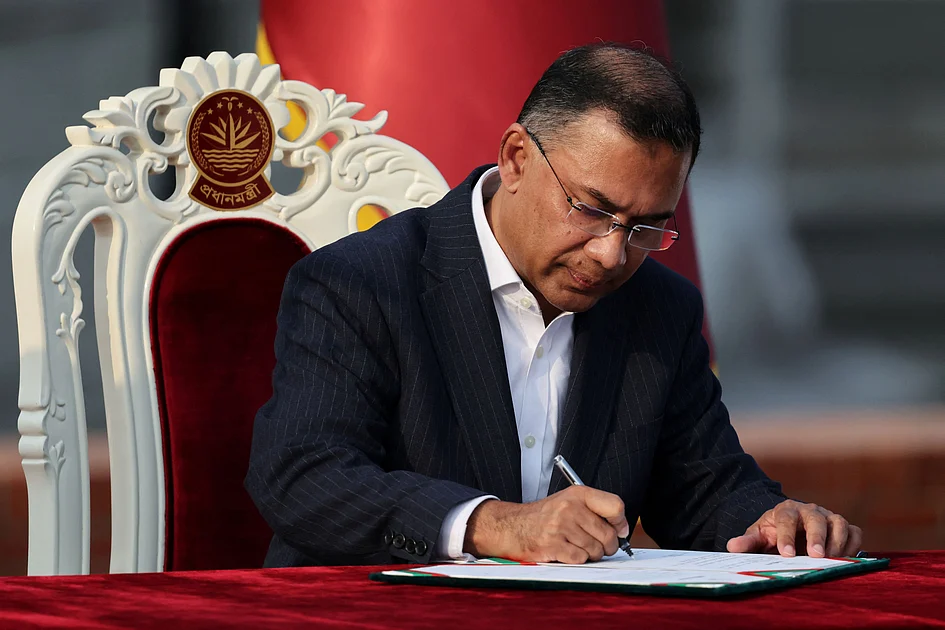
In his inaugural policy address, Bangladesh’s newly appointed Prime Minister Tarique Rahman has committed to addressing the nation’s pressing economic challenges during the holy month of Ramadan. The 60-year-old political scion, sworn into office on Tuesday, faces the formidable task of stabilizing essential commodity prices while implementing comprehensive governance reforms.
Rahman, son of former Prime Minister Khaleda Zia and the late President Ziaur Rahman, assumes leadership following his party’s decisive electoral victory. His administration inherits a complex landscape marked by political turbulence and economic strain, particularly after the 2024 uprising that ousted Sheikh Hasina’s government.
During a nationally televised speech on Wednesday evening, the Prime Minister issued a stern warning against commercial exploitation during Ramadan. He emphasized the spiritual significance of the holy month, stating, ‘This period of self-purification should not exacerbate public hardship. Traders must refrain from treating Ramadan as an opportunity for excessive profit and ensure essential goods remain accessible to all citizens.’
The government’s commitment comes against a backdrop of persistent inflationary pressures. Recent data reveals Bangladesh’s annual inflation reached 8.58% in January 2026—the highest recorded since May 2025—with food prices continuing to burden household economies.
Rahman outlined a multi-faceted approach to economic management, pledging to dismantle market syndicates that manipulate prices while establishing robust mechanisms to protect both consumers and legitimate businesses. His administration will prioritize judicial reforms and anti-corruption measures, asserting that ‘the rule of law, rather than political influence or coercion, will serve as the foundational principle of governance.’
Beyond immediate economic concerns, the Prime Minister revealed ambitious infrastructure modernization plans. These include comprehensive reorganization and expansion of the national railway network, alongside enhanced coordination between transportation ministries to develop an integrated transit system. This initiative aims to alleviate urban congestion while improving nationwide connectivity and commercial efficiency.