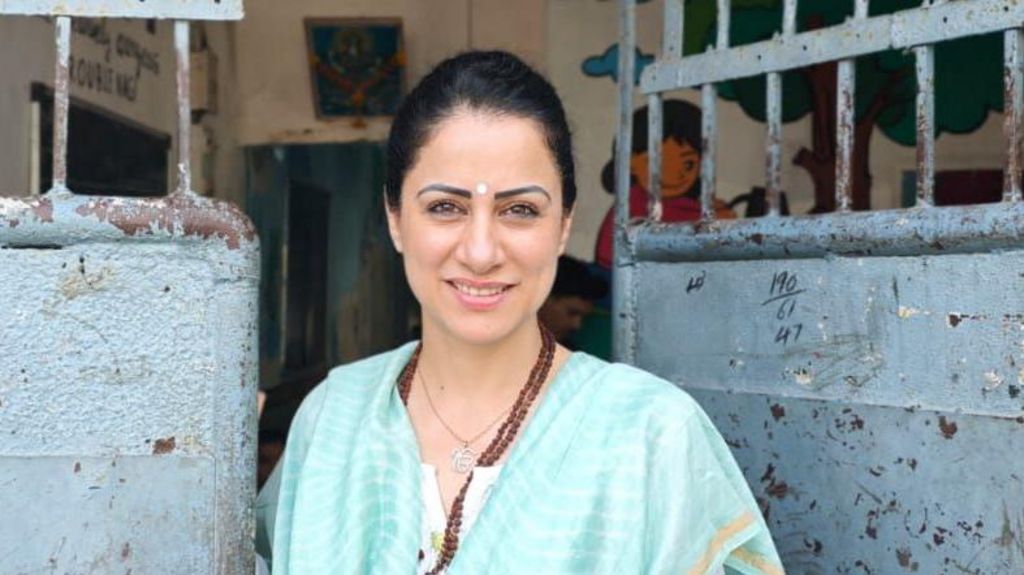
In the dense urban landscape of Mumbai’s Colaba district, a vibrant educational revolution is unfolding within the city’s most marginalized communities. Artist and educator Rouble Nagi has been awarded the prestigious 2026 Global Teacher Prize, accompanied by a $1 million award, for her extraordinary work establishing over 800 learning centers across India’s underserved communities.
The Varkey Foundation, in collaboration with UNESCO, selected Nagi from among 5,000 nominations spanning 139 countries for her innovative approach to education through the Rouble Nagi Art Foundation (RNAF). Her methodology transforms unconventional spaces—from laundry workers’ settlements to open slum areas—into dynamic learning environments where art serves as the primary educational catalyst.
Nagi’s journey began three decades ago when a chance encounter with an out-of-school child during an art workshop revealed the educational disparities in Mumbai’s slums. This inspired her to initiate community engagement through mural painting, which unexpectedly attracted curious children eager to learn. This discovery evolved into a formalized educational model that combines artistic expression with fundamental academic instruction.
The RNAF’s approach emphasizes flexibility and accessibility, with lessons conducted in open areas using mats instead of traditional classrooms. Volunteers provide skill-based instruction while addressing the complex socioeconomic challenges facing students. Teachers frequently assume additional roles as counselors and family liaisons, conducting home visits when children miss classes and holding regular parent sessions to maintain educational continuity.
A cornerstone initiative, the ‘Misaal’ project, converts slum walls into educational canvases featuring murals that teach scientific concepts, hygiene practices, environmental awareness, and social responsibility. These visual lessons serve as both community beautification and continuous educational tools that stimulate curiosity and behavioral change.
The foundation’s impact is evidenced by success stories like Mayur, a former student who now operates his own art classes and printing business while volunteering weekends with RNAF. Current students like seven-year-old Khushi aspire to become educators themselves, demonstrating the program’s cyclical empowerment model.
Nagi plans to utilize the prize money to expand operations into Jammu and Kashmir, establishing a comprehensive skill-development and learning center equipped with computer technology. Her work demonstrates that educational transformation can occur anywhere—when approached with creativity, community trust, and unwavering commitment to marginalized populations.