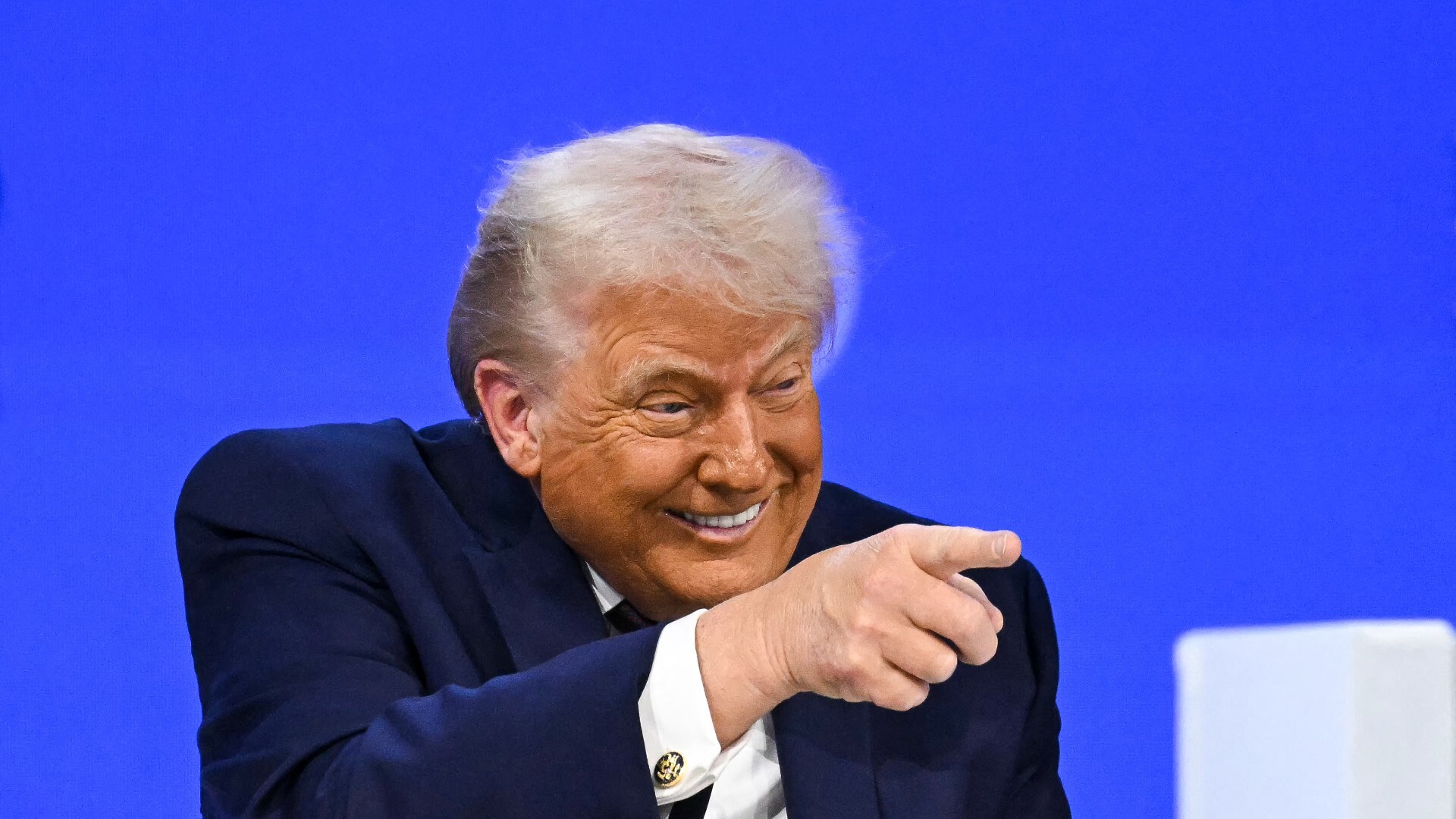
Washington, DC witnessed the inaugural gathering of the Trump administration’s “Board of Peace” for Gaza on Thursday, an initiative established under the 20-point ceasefire agreement enacted on October 10th and subsequently ratified in Davos, Switzerland on January 22nd. President Donald Trump serves as the board’s permanent chairman, presiding over a diverse assembly of international representatives.
White House Press Secretary Karoline Leavitt confirmed participation from more than twenty nations during Wednesday’s press briefing, though specific attendee details remained initially undisclosed. The administration extended invitations to approximately sixty countries, with at least twenty-five having originally committed to membership. Notably, the board’s founding members include Russian President Vladimir Putin and Israeli Prime Minister Benjamin Netanyahu, both subject to International Criminal Court arrest warrants.
The board’s official X account has been actively recognizing participating nations through digital commemorative plaques. Several governments independently announced their attendance at the event, hosted at the recently renamed Donald J Trump Institute for Peace. Confirmed participants include Pakistan’s Prime Minister Shehbaz Sharif, Vietnam’s Communist Party leader To Lam, and Indonesian President Prabowo Subianto. Israel’s Foreign Minister Gideon Sa’ar and Turkey’s Foreign Minister Hakan Fidan have also verified their presence. Italy’s Foreign Minister Antonio Tajani will attend in an observational capacity, a position shared by several European Union members.
Attendance does not necessarily indicate full alignment with U.S. positions on Gaza. Prime Minister Sharif, for instance, has reportedly declined to discuss Hamas disarmament while simultaneously demonstrating support for Trump through a Nobel Peace Prize nomination. Vietnamese leader Lam seeks aviation agreements with the United States, while Gulf nations aim to strengthen existing military, energy, and real estate partnerships with the Trump administration, particularly through presidential son-in-law Jared Kushner.
Kushner, despite holding no formal government position, has taken a leadership role in conceptualizing Gaza’s redevelopment, described by Leavitt as voluntary contribution. His detailed PowerPoint presentation from the Davos meeting outlined reconstruction and humanitarian vision, including local security provisions—a topic scheduled for discussion during Thursday’s meeting.
Leavitt confirmed over $5 billion in pledged reconstruction funds, with distribution mechanisms to be determined by the board. The executive body consists of U.S. officials, real estate magnates, and billionaires, generating concern among critics regarding potential conflicts of interest.
President Trump announced anticipated troop commitments to the International Stabilisation Force for Gaza, with Indonesia considering substantial arms purchases while offering up to 1,000 peacekeeping personnel. The president emphasized Hamas’s requirement for “Full and Immediate Demilitarization,” though the organization has offered weapon burial for long-term truce while resisting complete demilitarization without security guarantees against U.S.-armed Israel. Israel has conversely refused mutual security agreements providing Hamas with attack assurances.
Notably, Hamas maintains no direct representation on the board, continuing negotiations through Egyptian and Qatari mediators. The board’s charter contains no specific references to “Gaza” or “Palestinian,” and Trump has expressed intentions to expand the initiative’s scope to address other international crises, citing United Nations inadequacies.
The initiative faces substantial international criticism. EU High Representative for Foreign Affairs Kaja Kallas noted the board’s failure to reference Gaza or the UN, contrasting with original resolution provisions for temporal limitations and Palestinian inclusion. Spanish Foreign Minister Jose Manuel Albares and U.S. Senator Chris Murphy similarly criticized the endeavor. Spain and most European nations have refused participation, with the Vatican declining its invitation and Canada’s invitation being rescinded.
Michael Hanna, US Program Director at the International Crisis Group, noted that many participating nations hope to focus U.S. attention and leverage Israeli influence. He cautioned that success depends heavily on Trump’s sustained engagement and impartial mediation, suggesting the president’s personal legacy investment might provide the initiative’s best chance for progress.
The humanitarian situation remains dire, with over 600 Palestinian fatalities reported since the ceasefire implementation. Palestinians attempting return through reopened Rafah crossing report delays, interrogations, and soldier abuse. UN humanitarian mission coordination faces Israeli restrictions, with three of eight recent missions denied access, including critical water treatment plant assistance in Khan Younis.
Craig Mokhiber, former UN human rights adviser who resigned over the organization’s Gaza response, characterized the meeting as “a criminal conspiracy” involving genocide, apartheid, and war crimes. This perspective aligns with other critics of Israel’s ongoing assault, which has claimed over 72,000 Palestinian lives. Greek economist Yanis Varoufakis suggested the board serves to rehabilitate Netanyahu’s propaganda position while continuing genocide through starvation and medical deprivation.
Meanwhile, Israeli restrictions in the occupied West Bank have intensified post-ceasefire, with settler attacks on Palestinian properties and Knesset-approved land annexation advancing despite Trump’s previous assurances to Arab and Muslim leaders against West Bank annexation.