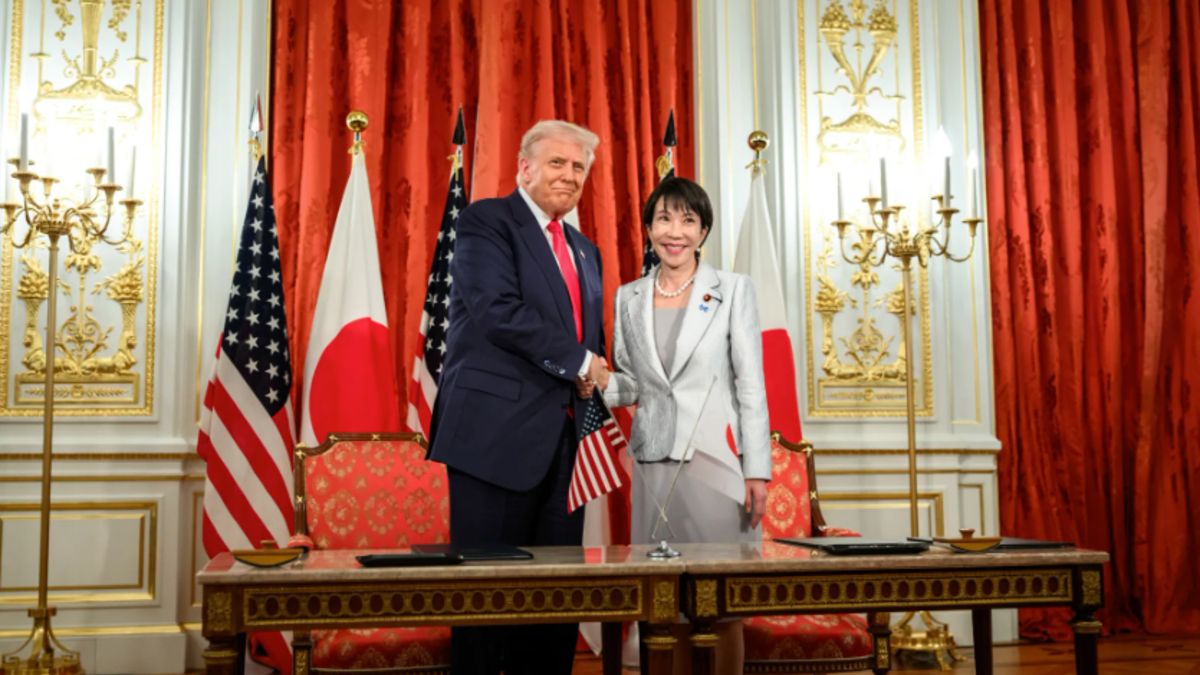
Japan has initiated the first phase of a monumental investment initiative into the United States, marking a significant milestone in international economic relations. This development follows the decisive electoral triumph of Prime Minister Sanae Takaichi’s Liberal Democratic Party, which has paved the way for strengthened bilateral cooperation.
The initial investment tranche, valued at approximately $36 billion, represents merely the beginning of a comprehensive commitment that could ultimately reach $550 billion. This massive financial undertaking stems from a trade agreement finalized in July, wherein Japan secured reduced US tariffs on its exports. In September, Washington lowered its reciprocal tariffs on Japanese goods from 25% to 15%, creating favorable conditions for enhanced economic collaboration.
US President Donald Trump celebrated the development through social media, proclaiming: “Our massive trade deal with Japan has just launched! Japan is now officially, and financially, moving forward with the first set of investments under its $550 billion commitment to invest in the United States of America.” The President emphasized that this agreement would revitalize American industry, generate hundreds of thousands of jobs, and bolster national economic security.
The initial investment portfolio includes three strategic projects: oil and gas infrastructure in Texas, power generation facilities in Ohio, and critical minerals processing in Georgia. The Ohio power plant is projected to become the largest gas-powered facility in history, while the LNG export terminal aims to strengthen America’s energy dominance. The critical minerals initiative seeks to reduce foreign dependency, though China’s global rare earth dominance remained unmentioned in official statements.
Chinese analysts perceive this economic shift as potentially detrimental to China’s interests. Commentator Xu Sanlang argues that strengthened US-Japan ties could accelerate supply chain diversification away from China toward American allies. Since 2010, Japan has systematically reduced its reliance on Chinese manufacturing, redirecting investments toward Southeast Asia, the United States, and Europe.
The tariff structure further incentivizes this realignment, with US tariffs on Chinese goods averaging 53.6% compared to approximately 15% on Japanese products. This differential approach appears designed to economically isolate China while strengthening alliances.
The agreement mandates Japan to immediately increase US rice imports by 75%, purchase $8 billion in American goods including agricultural products and energy exports, acquire Boeing aircraft and defense equipment, and lift restrictions on US automotive imports.
Geopolitical tensions have concurrently escalated, particularly following Prime Minister Takaichi’s November statement regarding Taiwan potentially constituting a “survival-threatening situation” for Japan. Beijing responded with tightened export controls on dual-use items to Japan, though recent approvals suggest possible diplomatic thaw following February discussions between Trump and Chinese President Xi Jinping.
Analysts recommend measured response from China, emphasizing the country’s strengths in renewable energy, artificial intelligence, and quantum computing as counterbalancing factors. The evolving situation represents a complex interplay of economic strategy, geopolitical positioning, and global supply chain restructuring that will likely define international relations for years to come.