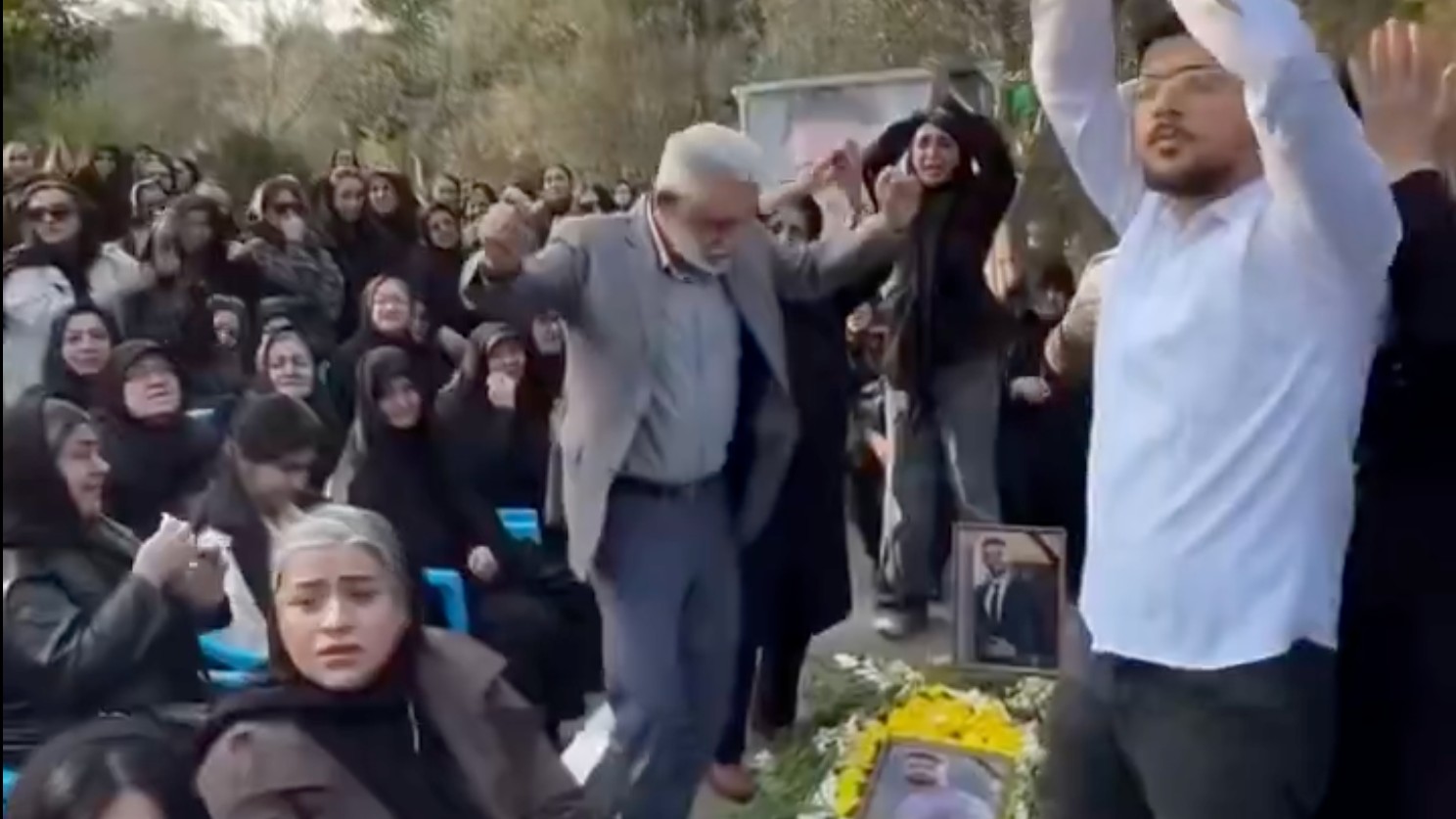
Across Iran on Tuesday, traditional memorial ceremonies for victims of the state’s violent crackdown on anti-government protests evolved into powerful displays of civil disobedience, blending grief with unprecedented acts of defiance.
The Chehellom ceremonies, marking forty days since death in accordance with Iranian tradition, became platforms for confrontation as mourners clashed with riot police and Islamic Revolutionary Guard Corps forces in multiple cities. In a striking departure from conventional mourning practices, families and supporters of the deceased engaged in dancing, clapping, and playing music beside fresh graves—actions that directly challenge the establishment’s prescribed forms of religious observance.
This transformation of ritual carries profound historical resonance. During the 1979 Islamic Revolution, similar commemorations for those killed by the Shah’s forces helped galvanize opposition. Now, four decades later, the tradition has been repurposed as a strategic protest mechanism against current rulers.
The scale of loss remains contested. While official figures acknowledge 3,117 deaths, the US-based Hrana news agency reported Monday that 6,508 protesters had been killed during weeks of demonstrations. Despite state attempts to co-opt the narrative by announcing official commemorations, security forces maintained overwhelming presence at cemeteries, establishing widespread checkpoints and engaging in clashes with mourners in Abdanan and Mashhad.
At Tehran’s Behesht-e Zahra cemetery, witnesses described crowded scenes where sections 322 and 323 were packed with both grieving families and supporters wearing black. The atmosphere shifted between conventional mourning and radical expression: young people played celebratory music from phones while dancing beside graves, wedding cars decorated with black ribbons processed slowly through burial grounds, and mourners chanted revolutionary verses.
This practice of dancing at graves, while rooted in old tribal customs for those who died before marriage, has gained new symbolic meaning. Viral videos from recent weeks show grieving families transforming funerals into acts of resistance. One father, mourning his son Reza Asadi, stood by the grave and declared to the crowd: ‘People! This is my Reza for the homeland!’ before performing traditional dance steps.
As these unofficial mourning practices continue, human rights organizations report escalating executions across Iranian prisons. At least nine individuals were executed on Tuesday in multiple cities, with authorities attributing the deaths to drug crimes and murder. However, lawyers maintain that defendants were systematically denied legal representation and forced to confess under torture.
Additional concerns focus on the detention and killing of children during protests, with the Iranian Teachers’ Union reporting at least 200 minors killed. While officials claim all detained schoolchildren have been released, independent verification remains impossible.
Amid collective grief, attention has partially shifted to renewed nuclear negotiations between Tehran and Washington, which Iran’s foreign minister has characterized as ‘constructive’—creating a complex backdrop of domestic repression and diplomatic engagement.