ANKARA, Turkey — A Turkish parliamentary commission has overwhelmingly endorsed a groundbreaking set of recommendations aimed at revitalizing peace negotiations with the Kurdistan Workers’ Party (PKK), marking a significant development in the four-decade conflict. The National Solidarity, Brotherhood and Democracy Commission approved the comprehensive roadmap on Wednesday, outlining conditional measures for reconciliation while maintaining stringent security prerequisites.
The commission’s final draft, obtained by journalists, emphasizes that legal reforms for reintegrating former militants must be contingent upon verified disarmament by state security institutions. The framework proposes temporary legal provisions to facilitate the return of PKK members who formally renounce violence, while explicitly avoiding blanket amnesty provisions.
Among the key recommendations are measures to expand freedom of expression protections, release elderly and ill prisoners, and ensure nonviolent activities are no longer prosecuted under anti-terrorism legislation. The report also advocates for ending the controversial practice of appointing government trustees to replace elected mayors from pro-Kurdish political parties.
The PKK, designated as a terrorist organization by Turkey, the United States, and European Union, has engaged in armed conflict since 1984 resulting in tens of thousands of casualties across Turkey and neighboring regions. The group initially pursued Kurdish independence before shifting demands toward autonomy and expanded rights within Turkey.
Parliamentary Speaker Numan Kurtulmuş emphasized that the report does not constitute an amnesty arrangement, characterizing it instead as “a clear expression of the determination to build the future together without denying our suffering.” The recommendations received 47 votes in favor with only two opposed and one abstention.
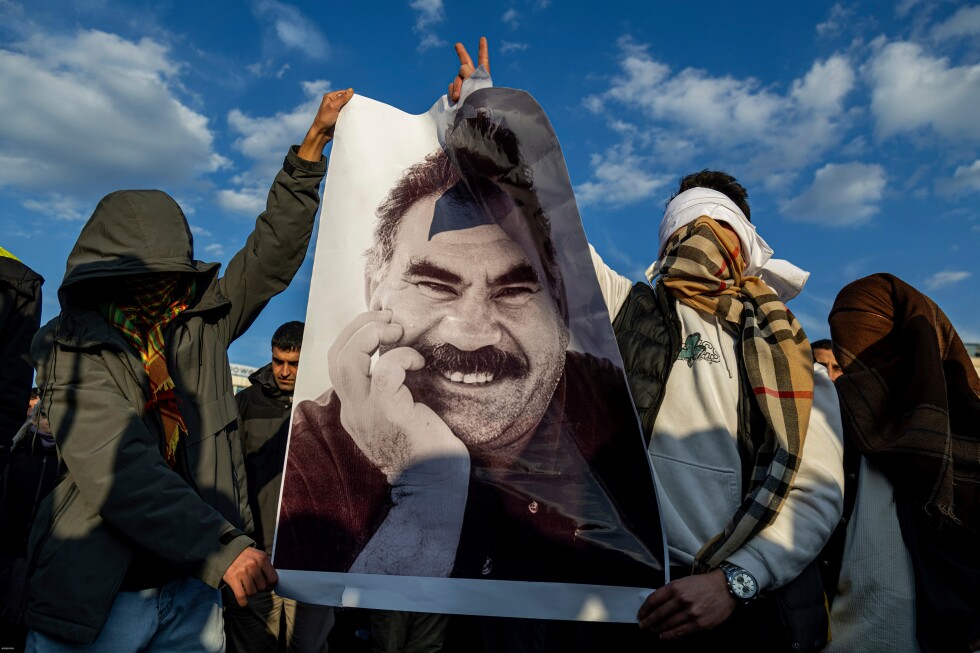
The commission, established in August following the PKK’s May announcement of intentions to disarm and disband after an appeal from imprisoned leader Abdullah Öcalan, stopped short of recommending parole for the controversial figure. Instead, it urged compliance with European Court of Human Rights and Turkish Constitutional Court rulings regarding detention conditions.
President Recep Tayyip Erdoğan welcomed the commission’s work in a televised address, stating it has “put forward a perspective that will give momentum” to reconciliation efforts. The report additionally proposes broader democratization measures including media law reforms to protect legitimate criticism and municipal governance changes that would allow local councils to elect replacement mayors rather than accepting government appointments.
No immediate response was available from the PKK, which has previously demanded formal legal guarantees from the Turkish government to advance the peace process.