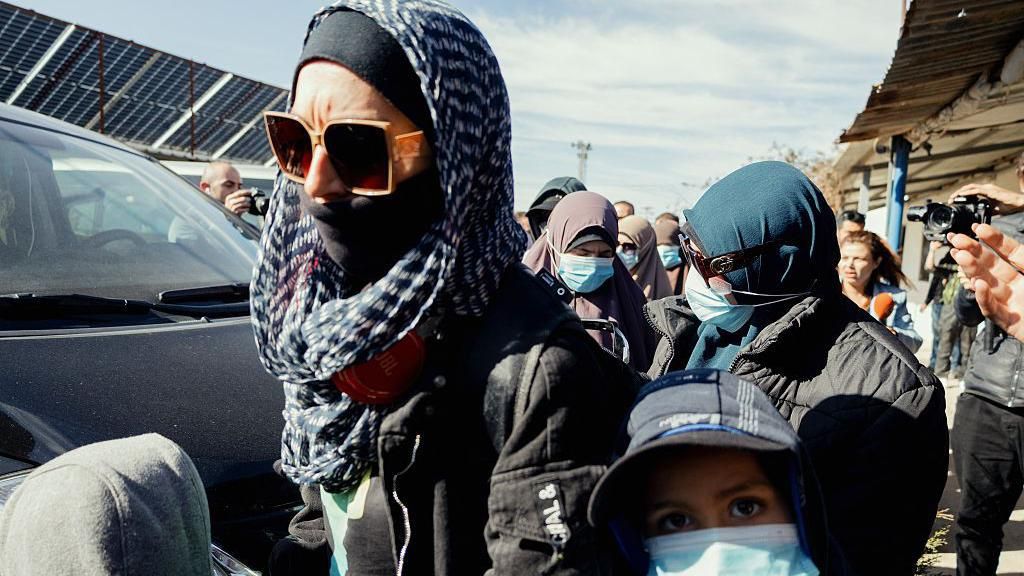
In a decisive national security move, Australian authorities have imposed a two-year entry ban on a citizen allegedly associated with the Islamic State (IS) militant group. This individual was among 34 Australian women and children attempting to return home after their release from a Syrian detention camp earlier this week, only to be denied passage by Syrian officials citing unspecified technical complications.
Home Affairs Minister Tony Burke confirmed the exclusion order on Wednesday, stating it was enacted based on security agency recommendations. He clarified that the remaining 33 individuals in the group—comprising 23 children and their guardians, believed to be wives and widows of IS combatants—did not meet the legal thresholds for similar bans.
The Australian government maintains its firm stance against facilitating the repatriation of these citizens. Prime Minister Anthony Albanese emphasized this position during a press conference, asserting that those who voluntarily aligned themselves with a brutal ideology seeking to destroy Australia’s way of life must accept the consequences of their choices. “You make your bed, you lie in it,” he stated unequivocally.
This stance has sparked legal concerns, with experts warning that Australia may be violating international obligations regarding citizens’ right to return. When questioned about reports that group members hold valid Australian passports, Albanese committed to not breaching domestic law but provided no further clarity on repatriation plans.
The detainees from al-Roj camp in northern Syria represent part of a larger contingent of Australians held in Syrian detention facilities since IS’s territorial defeat in 2019. Opposition politicians have amplified security concerns, with Liberal Party Senator Jonno Duniam questioning the apparent inconsistency in risk assessment and offering legislative support to expand exclusion powers.
Al-Roj camp, housing over 2,000 detainees from 40 nations including controversial figure Shamima Begum (whose British citizenship was revoked in 2019), continues to draw international attention. Camp director Hakmiyeh Ibrahim appealed via ABC to all nations with citizens in limbo, warning that children are being exposed to dangerous ideologies amid deteriorating conditions characterized by malnutrition and resource deprivation.
Australia’s position aligns with several Western nations including France, the Netherlands, and the UK, which have similarly resisted large-scale repatriation of citizens from Syrian camps.