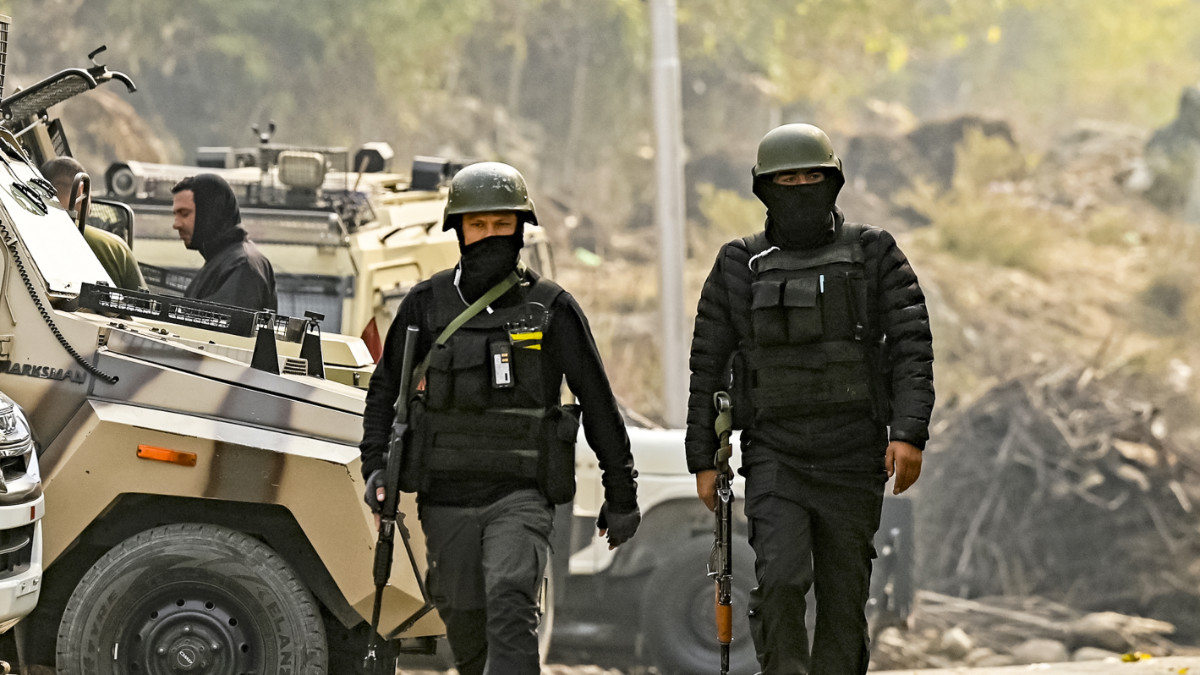
A recently declassified email from April 2015, released by the US Justice Department, has exposed convicted sex offender Jeffrey Epstein’s indirect access to highly sensitive diplomatic communications regarding covert military negotiations between Pakistan and Saudi Arabia. The correspondence, authored by former UN official Nasra Hassan, detailed a proposed clandestine agreement for Pakistan to deploy elite Special Service Group commandos—known as the ‘Black Storks’—to Saudi Arabia’s border with Yemen in support of the kingdom’s military campaign against Houthi rebels.
The email, originally sent to Norwegian diplomat Terje Rod-Larsen (architect of the Oslo Peace Accords) and subsequently forwarded to Epstein, contained operational specifics not available in contemporary public reporting. Hassan revealed that Saudi King Salman had personally requested Pakistani ground troops to secure strategic territory along the Yemeni border, while also seeking deployment of Pakistan’s Chinese-equipped JF-17 fighter jets.
This disclosure emerges against the backdrop of the devastating Yemen conflict, wherein a Saudi-led coalition conducted thousands of airstrikes that failed to dislodge Houthi forces but precipitated humanitarian catastrophe with hundreds of thousands of civilian casualties. The email suggests Pakistan’s civilian government, despite public parliamentary rejection of direct military intervention in April 2015, engaged in covert discussions to provide Saudi Arabia with military support in exchange for crucial economic assistance.
Epstein’s involvement highlights his extensive connections to intelligence networks and arms dealers dating to the 1980s. The financier, who died in custody in 2019, had previously attempted to mediate regional disputes among Gulf states. The email’s transmission through Larsen—whose family connections to Epstein included beneficiaries in his will—underscores the intertwined relationships between diplomacy, intelligence, and illicit networks.
The revelation raises profound questions about backchannel diplomacy and the flow of confidential information to private individuals with criminal backgrounds, while also illuminating the complex geopolitical maneuvering that characterized the Yemen conflict.