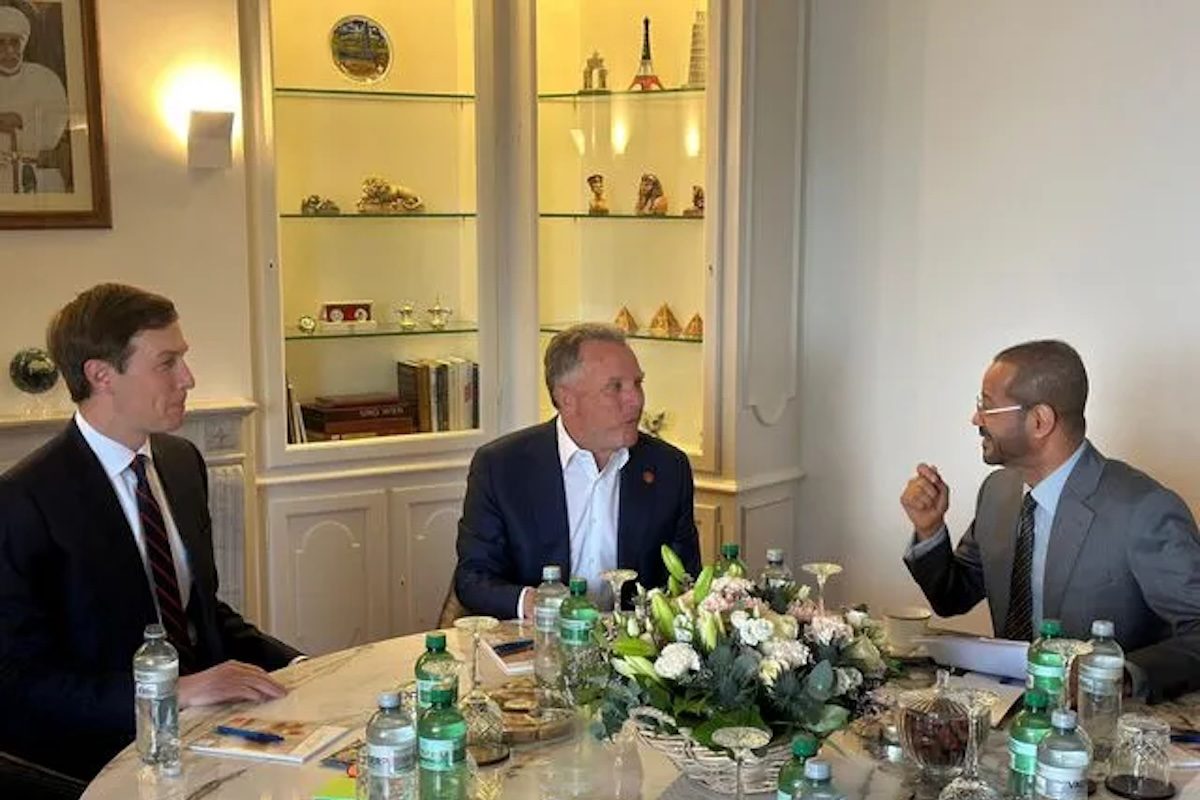
Geneva witnessed a pivotal moment in US-Iran relations on February 17, 2026, as diplomatic envoys engaged in three to four hours of indirect negotiations facilitated by Omani intermediaries. The talks, which avoided direct contact between American and Iranian delegations, reportedly produced a tentative framework agreement focusing primarily on uranium enrichment—a significant departure from the comprehensive demands previously outlined by the Trump administration.
According to Iranian sources, US negotiators Steve Witkoff and Jared Kushner acquiesced to a narrowed negotiation framework that potentially bypasses Secretary of State Marco Rubio’s established ‘pillars’ for any Iran agreement. These pillars explicitly require addressing Iran’s ballistic missile program, regional proxy forces, and human rights record alongside nuclear considerations.
The emerging arrangement, as interpreted by Iranian officials, links sanctions relief to concessions on uranium enrichment—a direct reflection of Supreme Leader Ali Khamenei’s stated position. However, the White House has maintained official silence regarding the Geneva discussions, leaving the accuracy of Iranian claims unverified.
This diplomatic maneuvering occurs against a backdrop of substantial US military mobilization. The Gerald R. Ford carrier group is en route to the Arabian Sea, while approximately 50,000 US troops are now stationed across the Middle East—a notable increase from the typical 34,000-40,000 baseline. Advanced military assets including F-35 stealth fighters, F-15E Strike Eagles, and A-10 Thunderbolts have been deployed to regional bases, complemented by sophisticated missile defense systems such as THAAD batteries in Jordan and Patriot installations throughout the Gulf.
The convergence of diplomatic developments and military posturing creates a complex decision matrix for President Trump, who must weigh the potential for a limited nuclear agreement against Rubio’s comprehensive demands and considerable internal opposition. The timing of military assets reaching full operational capacity in early March establishes a de facto deadline for diplomatic resolution before potential escalation.