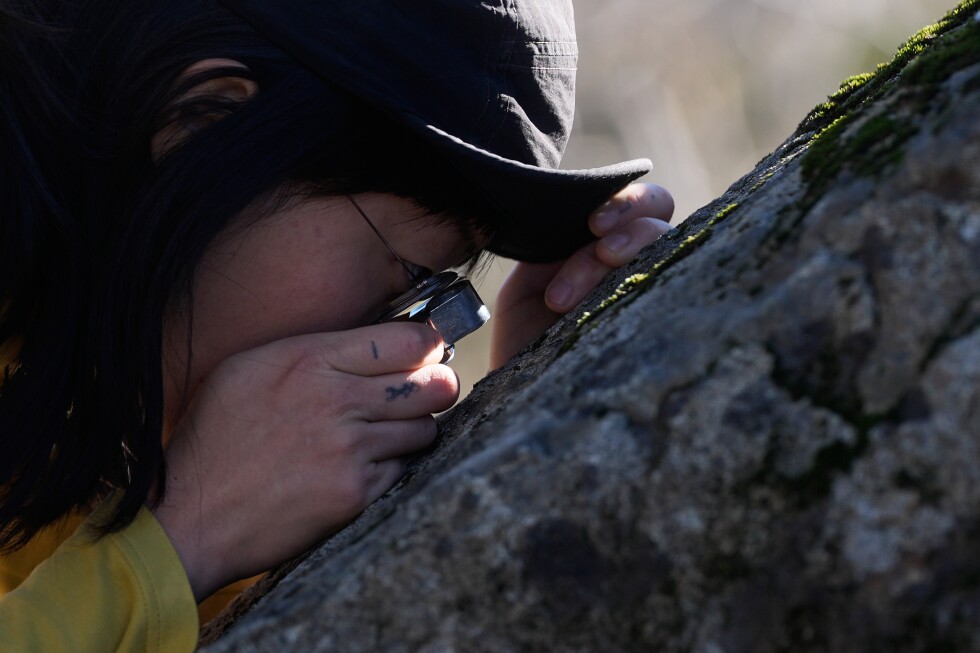
Beneath the canopy of California’s Manzanita trees, mycologist Jessica Allen embarked on a scientific treasure hunt—searching for the elusive Manzanita butter clump, a rare yellow mushroom last documented in Napa County two years prior. Yet within moments, her attention diverted to a dazzling microcosm thriving on nearby rocks: intricate lichens bursting with otherworldly shapes and colors.
This scene at UC Davis’ McLaughlin Reserve exemplifies a growing movement where professional scientists and amateur naturalists collaborate to protect Earth’s most overlooked kingdom—fungi. Despite comprising an estimated 2.5 million species and contributing $54 trillion annually to the global economy through medicine, food, and ecosystem services, fungi remain the neglected orphans of conservation efforts.
“It’s a pretty exciting time in fungal conservation,” stated Allen, who serves as mycologist for NatureServe, a biodiversity data hub. While Europe has prioritized fungal protection for decades, the United States trails significantly—only two fungal species (both lichens) currently receive federal Endangered Species Act protection.
The conservation challenge stems from fungi’s enigmatic nature. Most species exist primarily as hidden mycelial networks, emerging as mushrooms only under precise conditions. Scientists have documented merely 155,000 species—approximately 6% of estimated diversity—leaving vast knowledge gaps regarding distribution, threats, and conservation needs.
Citizen scientists bridge this critical information void. Organizations like the California Lichen Society conduct field excursions where enthusiasts document specimens through platforms like iNaturalist and Mushroom Observer. These amateur researchers, including retired mechanic Ken Kellman and chemist Larry Cool, provide invaluable data that helps professionals track biodiversity and identify at-risk species.
Threats to fungal diversity are multifaceted: climate change alters temperature and precipitation patterns; development and logging destroy habitats; pollution degrades air and soil quality; and overharvesting depletes medicinal species like Europe’s endangered quinine conk.
Gregory Mueller, co-chair of the IUCN’s fungal conservation committee, notes that 411 of 1,300 evaluated fungi species globally face extinction risk. “The U.S. is still far behind,” he acknowledged, “but community science initiatives are driving change.”
Though Allen’s group didn’t locate their target species that day, the expedition exemplified conservation’s incremental progress—each documented lichen and mushroom contributing to understanding Earth’s essential yet underappreciated fungal networks.