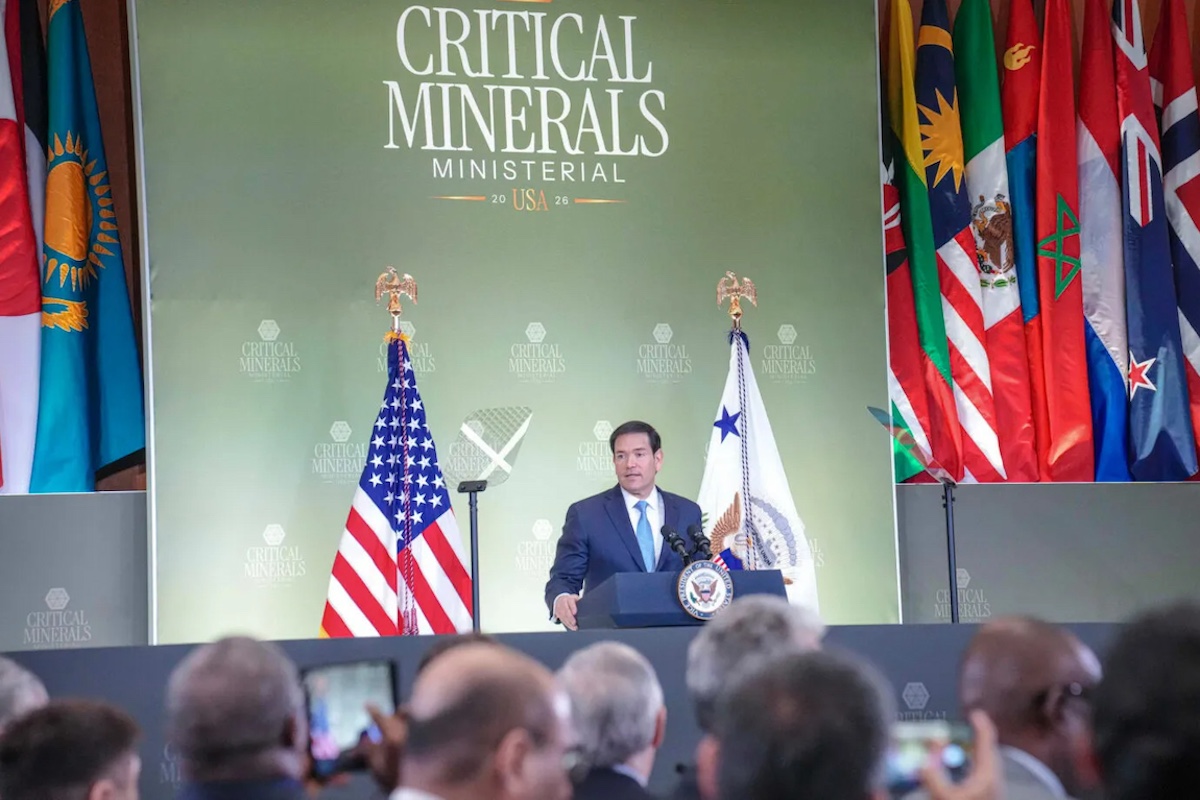
The United States is spearheading an ambitious international initiative to establish a 55-country critical minerals alliance, aiming to coordinate global supply chains and pricing mechanisms for metals essential to technology and defense sectors. This strategic move, championed by the Trump administration, seeks to diminish Western reliance on Chinese-dominated supply networks while addressing perceived vulnerabilities in national security frameworks.
During his address at the Munich Security Conference on February 14, US Secretary of State Marco Rubio articulated a compelling vision for allied cooperation in securing rare earths and strategic minerals. He criticized post-Cold War economic policies that led to what he termed a “dangerous delusion” of inevitable global liberalization, arguing that unfettered trade practices enabled certain nations to undermine Western industries through subsidized competition.
“We embraced what was new and glamorous while outsourcing what seemed old and unfashionable,” Rubio stated, emphasizing how this approach resulted in deindustrialization, job losses, and transfer of critical supply chain control to geopolitical rivals.
The administration’s concrete actions include the February 4 Critical Minerals Ministerial conference, where representatives from 54 countries and the European Commission convened in Washington. This gathering culminated in new bilateral frameworks, memorandums of understanding, and the launch of FORGE (Forum on Resource Geostrategic Engagement)—a coordination platform for allied policy and investment.
President Trump subsequently announced Project Vault, an EXIM Bank-led initiative backed by a $10 billion direct loan to establish domestic mineral reserves and shield manufacturers from supply disruptions.
China, controlling approximately 60% of global niche metals production and over 90% of processing capacity, responded with measured confidence. Foreign Ministry spokesperson Lin Jian advocated for “an open, inclusive international trade environment beneficial to all,” opposing exclusive blocs that disrupt global economic order.
Chinese analysts highlight structural advantages that may impede US efforts: China’s dominance in complex separation technologies, possession of nearly half the world’s rare-earth patents, and deeply integrated manufacturing ecosystems. Market realities suggest many alliance participants, including Argentina and South Korea, appear reluctant to fully sacrifice Chinese market access despite political alignment with US initiatives.
Industry experts estimate achieving supply chain independence would require Western nations to overcome significant technological and economic hurdles spanning 10-20 years of development.