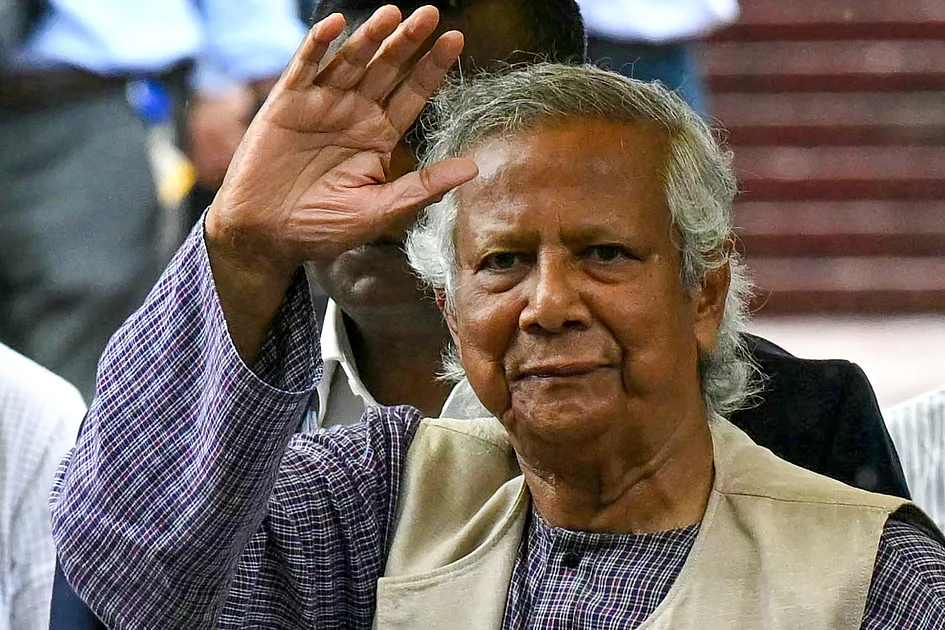
In a historic transition of power, Bangladesh’s interim leader Muhammad Yunus formally resigned from his position as chief adviser on Monday, marking the conclusion of the caretaker government’s mandate. The 85-year-old Nobel Peace Prize laureate delivered a farewell address to the nation, celebrating what he characterized as a restoration of democratic principles following years of authoritarian rule.
Yunus returned from self-imposed exile in August 2024 amidst a dramatic political upheaval that saw the ousting of Sheikh Hasina’s government through a student-led uprising. He described the events as a ‘great liberation’ that freed the nation from what he termed ‘the grip of a demon.’
The political transition culminated in last week’s general elections, which resulted in a decisive victory for the Bangladesh Nationalist Party (BNP) and its leader Tarique Rahman. Yunus praised the electoral process as setting ‘a benchmark for future elections’ and commended voters, political parties, and electoral institutions for their participation in the democratic exercise.
Concurrent with the elections, Bangladeshi citizens endorsed sweeping constitutional reforms through a national referendum. The proposed ‘July Charter’—named after the month when the anti-Hasina uprising began—includes provisions for prime ministerial term limits, establishment of an upper parliamentary chamber, enhanced presidential powers, and strengthened judicial independence. While the referendum results are considered binding on winning parties, the reforms still require formal ratification by the newly elected parliament.
The BNP alliance secured 212 parliamentary seats, compared to 77 seats for the Jamaat-e-Islami-led coalition. Jamaat-e-Islami leader Shafiqur Rahman conceded defeat, pledging his party would serve as a ‘vigilant, principled, and peaceful opposition.’
Despite pre-election tensions that resulted in five fatalities and over 600 injuries according to police records, voting day proceeded without major incidents. Newly elected lawmakers are scheduled to be sworn in on Tuesday, with Tarique Rahman expected to assume the role of prime minister, leading the South Asian nation of 170 million people into a new political era.