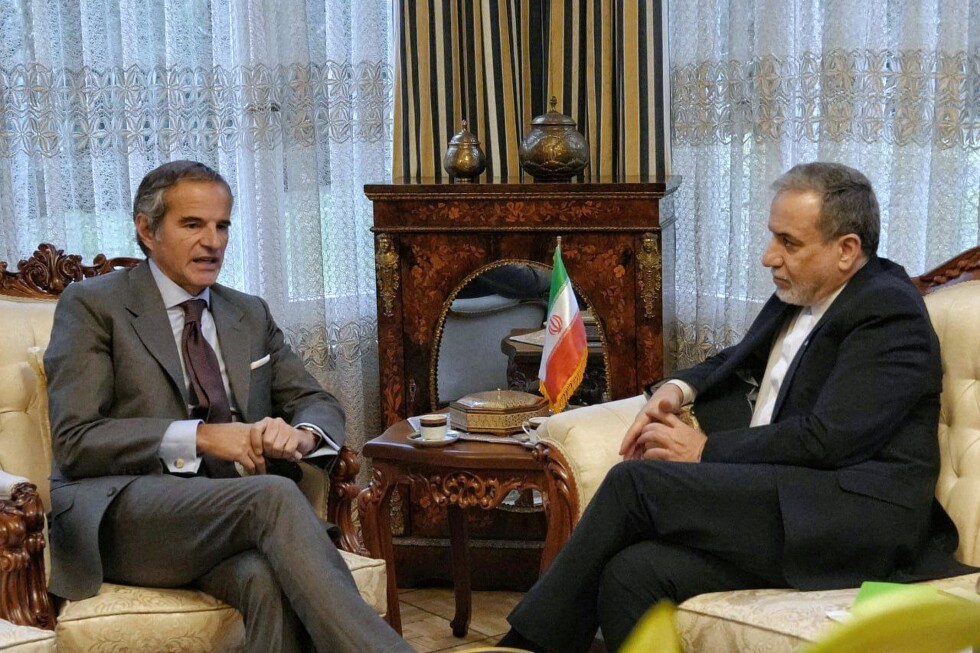
GENEVA — In a significant diplomatic development, Iran’s top foreign policy official engaged in direct discussions with the United Nations’ nuclear watchdog chief on Monday, setting the stage for crucial negotiations with the United States regarding Tehran’s controversial nuclear program.
Iranian Foreign Minister Abbas Araghchi convened with Rafael Grossi, Director-General of the International Atomic Energy Agency (IAEA), marking a notable thaw in relations following months of suspended cooperation. The meeting occurred alongside planned discussions with Omani Foreign Minister Badr al-Busaidi, whose nation is facilitating the indirect U.S.-Iran talks in Geneva.
Through a social media statement, Araghchi conveyed Tehran’s position: “I am in Geneva with real ideas to achieve a fair and equitable deal. What is not on the table: submission before threats.”
The diplomatic movement follows signals from Iranian Deputy Foreign Minister Majid Takht-Ravanchi, who indicated Sunday that Tehran might consider compromises on nuclear activities in exchange for relief from international sanctions. “The ball is in America’s court. They have to prove they want to have a deal with us,” Takht-Ravanchi told the BBC. “If we see sincerity on their part, I am sure we will be on a road to have an agreement.”
These developments occur against a complex backdrop of military posturing and failed previous negotiations. The United States has maintained significant military assets in the region, including the recent deployment of the USS Gerald R. Ford aircraft carrier. Previous talks collapsed following Israel’s military actions against Iran last year, which included U.S. airstrikes on Iranian nuclear facilities.
A critical concern remains Iran’s nuclear advancements. IAEA reports indicate Tehran has accumulated uranium enriched to 60% purity—technologically proximate to weapons-grade levels. Agency experts estimate this stockpile could potentially yield up to ten nuclear devices if weaponization occurred, though no evidence suggests Iran has crossed that threshold.
The current negotiations represent the second round of indirect discussions hosted by Oman, with the initial meeting occurring on February 6. Simultaneously, Geneva is hosting separate U.S.-brokered talks between Russian and Ukrainian officials, creating a rare convergence of major diplomatic initiatives in the Swiss city.
Israeli Prime Minister Benjamin Netanyahu recently visited Washington to advocate for stringent agreement terms that would address Iran’s ballistic missile capabilities and support for regional proxy groups. The Trump administration maintains its position that Iran must completely halt uranium enrichment, a demand Tehran consistently rejects while insisting its nuclear program serves purely peaceful purposes.