Vishal Bhardwaj’s latest cinematic offering ‘O Romeo’ emerges as a perplexing case study in squandered potential, combining brilliant individual performances with a fundamentally flawed narrative execution. Drawing inspiration from Mumbai’s notorious underworld era of the 1990s-2000s, the film allegedly takes creative inspiration from the legendary story of Sapna Didi—a real-life housewife turned vigilante who challenged Dawood Ibrahim’s criminal empire to avenge her husband’s murder.
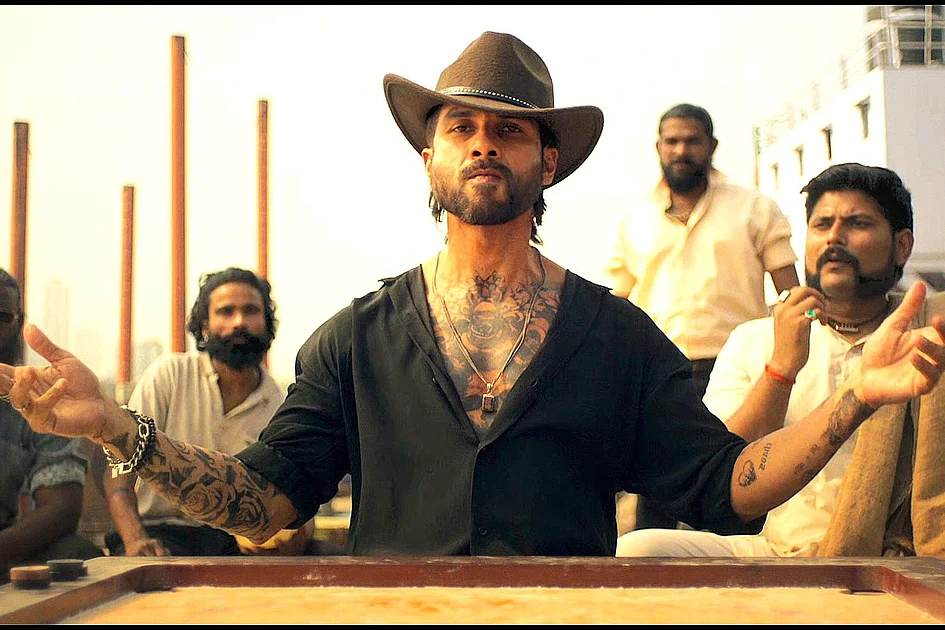
The film assembles an impressive creative ensemble, reuniting Bhardwaj with Shahid Kapoor following their acclaimed collaborations in ‘Haider’ and ‘Kaminey’. Kapoor embodies Hussain Ustara, a blade-wielding contract killer operating in Mumbai’s gritty underworld. His character development shows fascinating complexity, particularly through his relationships with intelligence officer Khan (Nana Patekar) and his foul-mouthed grandmother (Farida Jalal). The plot gains momentum when Ustara encounters Afshan Qureshi (Tripti Dimri), a widow seeking retribution for her husband’s murder at the hands of mafia kingpin Jalal (Avinash Tiwary).
Bhardwaj demonstrates directorial brilliance in isolated sequences, employing symbolic imagery like rifle-shaped liquor bottles and staging action sequences in unconventional locations including an empty theater playing ‘Dhak Dhak’. The first half maintains engaging tension through well-crafted montages exploring the developing relationship between Ustara and Afshan against Mumbai’s atmospheric backdrop.
However, the film undergoes a dramatic deterioration in its second act with an ill-conceived relocation to Spain. This geographical shift introduces bizarre bullfighting sequences and transforms the previously menacing Jalal into a caricatured villain resembling 1980s Bollywood antagonists. The narrative becomes increasingly implausible, culminating in a climactic bullring confrontation that defies logical coherence while failing to generate emotional investment.
The fundamental weakness lies in the screenplay’s abandonment of its compelling source material. Rather than exploring the feminist undertones of a woman challenging patriarchal criminal structures, the film opts for excessive violence and profanity that overshadow character development. Despite Kapoor’s committed performance—blending elements of his previous roles from ‘Udta Punjab’ and ‘Kabir Singh’—the writing fails to provide adequate depth to either his character or Dimri’s potentially fascinating avenger.
Supporting performances from veteran actors provide occasional highlights, particularly Patekar’s nuanced portrayal of the morally ambiguous Khan. Yet these cannot compensate for the film’s structural deficiencies, including underdeveloped themes about political-criminal nexus and emotional conflicts surrounding loyalty and redemption.
‘O Romeo’ ultimately represents a disappointing departure from Bhardwaj’s established reputation for crafting sophisticated crime narratives with literary depth. The production values—including exceptional cinematography and melodic soundtrack—highlight the tragedy of wasted potential, making this underdeveloped effort particularly frustrating for audiences anticipating another masterpiece from the acclaimed director.