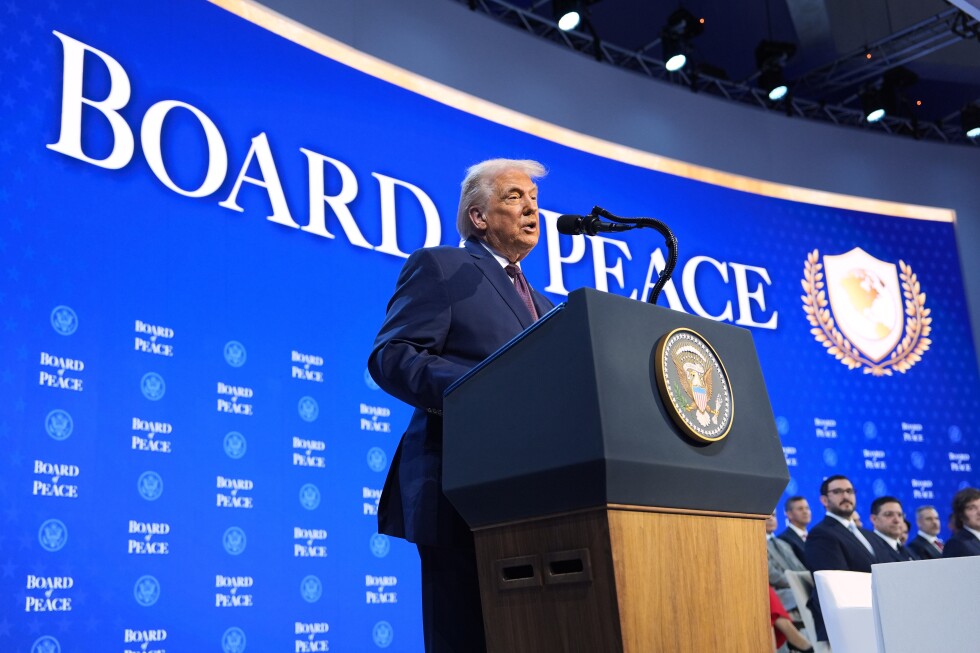
WEST PALM BEACH, Fla. — President Donald Trump announced on Sunday that his newly established Board of Peace has obtained commitments totaling $5 billion for the reconstruction of war-torn Gaza, alongside pledges of thousands of personnel for international stabilization and police forces in the territory. The formal announcement is scheduled for Thursday during the board’s inaugural meeting in Washington.
In a social media statement, Trump proclaimed the board would become “the most consequential International Body in History,” though he withheld specific details regarding contributing nations. However, Indonesia’s military independently confirmed preparations to deploy up to 8,000 troops by June’s end for potential humanitarian and peacekeeping operations in Gaza—marking the first concrete commitment to the Republican president’s initiative.
The reconstruction challenge remains monumental, with joint estimates from the United Nations, World Bank and European Union projecting costs approaching $70 billion to rebuild the coastal enclave after extensive damage from over two years of Israeli bombardment.
The ceasefire agreement central to this effort mandates an armed international stabilization force to maintain security and oversee the disarmament of Hamas—a critical condition for Israel. Despite this requirement, few nations have demonstrated willingness to participate in such a force thus far.
While the U.S.-brokered ceasefire from October 10 has reduced the most intense fighting between Israel and Hamas, intermittent Israeli airstrikes and skirmishes persist along military-controlled zones.
The Board of Peace, initially conceived as a mechanism to address the Israel-Hamas conflict, has evolved into a broader instrument for global crisis resolution, reflecting Trump’s ambition to reshape the post-World War II international order. This development coincides with apparent efforts to circumvent traditional multilateral institutions like the United Nations.
Notably, many European allies and other traditional partners have declined participation, expressing skepticism that the board might function as a potential rival to the UN Security Council. Israeli Prime Minister Benjamin Netanyahu, despite recent White House discussions with Trump, is not expected to attend Thursday’s gathering at the recently renamed Donald J. Trump U.S. Institute of Peace—a facility currently embroiled in litigation following the administration’s seizure of the think tank and dismissal of most staff last year.