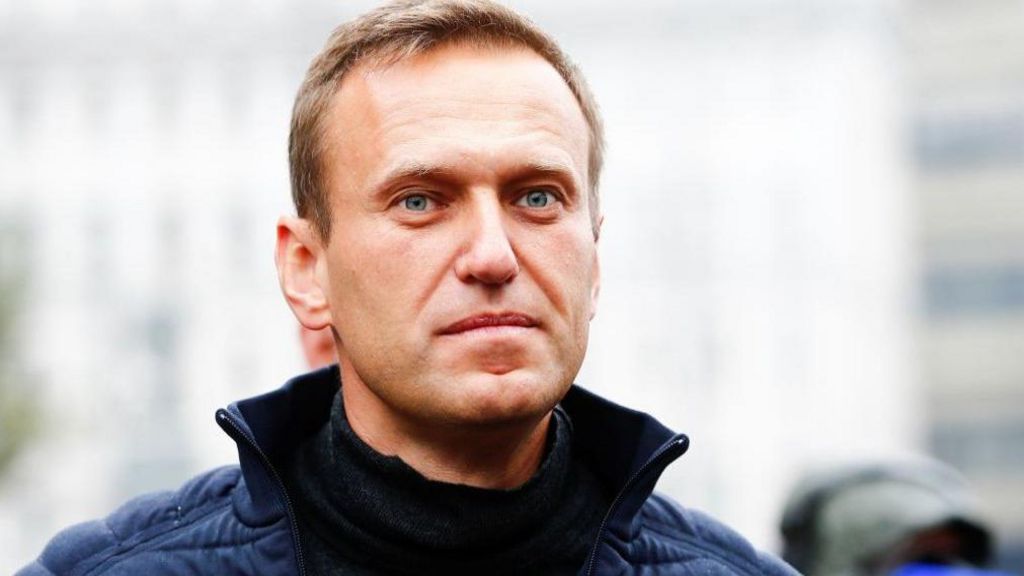
The United Kingdom has formally accused the Russian government of assassinating opposition leader Alexei Navalny using an exotic poison derived from dart frog toxin. This declaration comes exactly two years after Navalny’s death in a Siberian penal colony and follows a meticulous multinational forensic investigation.
Foreign Secretary Yvette Cooper, speaking from the Munich Security Conference where she met with Navalny’s widow Yulia Navalnaya, stated that British intelligence analysis of biological samples revealed traces of epibatidine—a lethal toxin with no plausible innocent explanation for its presence. “Only the Russian government had the means, motive and opportunity to deploy this lethal toxin against Alexei Navalny during his imprisonment in Russia,” Cooper asserted, adding that the Kremlin’s use of such chemical agents demonstrated both its despicable capabilities and profound fear of political opposition.
The UK’s findings have garnered international support, with Sweden, France, the Netherlands, and Germany jointly endorsing the accusation. In response to what it terms a blatant violation of the Chemical Weapons Convention, Britain has formally notified the Organisation for the Prohibition of Chemical Weapons of Russia’s alleged breach.
Navalny, Russia’s most prominent anti-corruption activist and Vladimir Putin’s foremost critic, died suddenly on February 16, 2024, at age 47 while serving a three-year sentence on widely condemned politically motivated charges. His death occurred shortly after his transfer to a remote Arctic penal colony, with Russian authorities claiming he collapsed after a walk and never regained consciousness.
This marks the second known poisoning attempt against Navalny, who survived a Novichok nerve agent attack in 2020 that necessitated extensive medical treatment in Germany. His widow Yulia Navalnaya, who had consistently maintained her husband was murdered, expressed gratitude for the international investigation: “I was certain from the first day that my husband had been poisoned, but now there is proof.”
The Kremlin has remained silent regarding these latest allegations, continuing its pattern of avoiding direct acknowledgment of Navalny’s existence. President Putin only briefly referenced the opposition leader’s death a month after it occurred, calling any human passing “always a sad event” without mentioning Navalny by name.