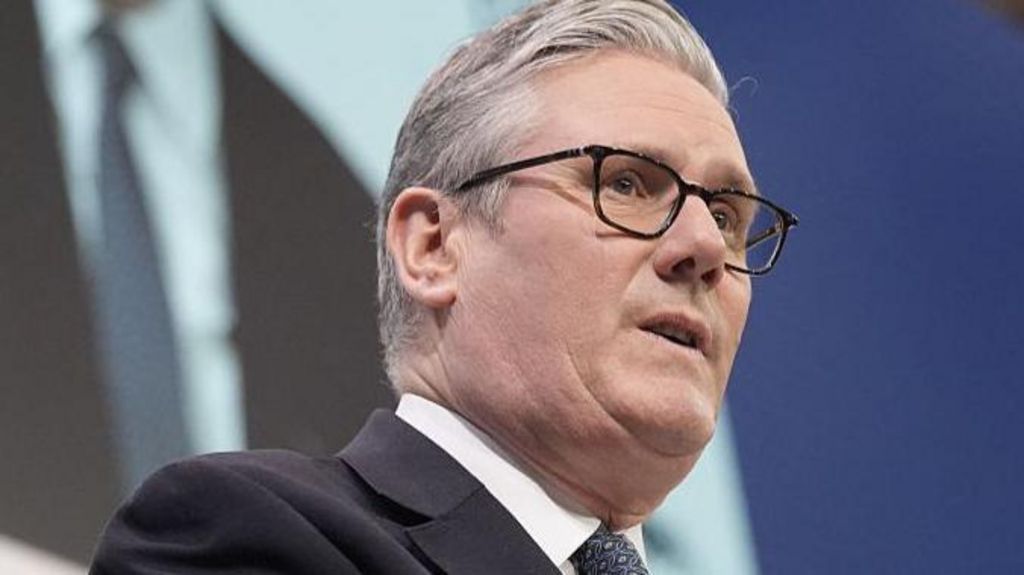
In a landmark address at the Munich Security Conference on Saturday, British Prime Minister Sir Keir Starmer issued a stark warning that Europe must prepare for potential armed conflict to safeguard its citizens, values, and democratic way of life. The Prime Minister’s speech marked a significant shift in UK foreign policy, emphasizing both military deterrence and economic cooperation with European partners.
Starmer announced the United Kingdom would deploy its carrier strike group to the Arctic and High North regions as part of a coordinated security initiative with US, Canadian, and NATO forces to counter Russian aggression. He emphasized that Russian rearmament would likely accelerate following any future peace settlement in Ukraine, necessitating robust European defense capabilities.
‘The currency of our age is hard power,’ Starmer told assembled world leaders. ‘We must build our hard power to deter aggression and be prepared to fight if necessary.’
The Prime Minister directly addressed concerns raised by US President Donald Trump regarding European commitment to NATO’s Article 5 collective defense principle. ‘Be in no doubt,’ Starmer declared, ‘if called on, the UK would come to your aid today. Our commitment to Article 5 is as profound now as ever.’
In a notable policy evolution, Starmer called for deeper economic integration with the European Union, acknowledging the current post-Brexit arrangement was ‘not fit for purpose.’ He proposed exploring ‘closer economic alignment’ and moving nearer to the single market in certain sectors, despite previous pledges to the contrary.
European Commission President Ursula von der Leyen, speaking before Starmer, praised him as an ‘unflinching ally and friend’ and echoed his call for European defense self-reliance. She described how Europe had undergone ‘shock therapy’ from the United States and must assume greater responsibility for its own security.
Starmer’s appearance followed a tumultuous domestic week that saw his leadership threatened by controversy over his appointment of Peter Mandelson, who had known connections to convicted sex offender Jeffrey Epstein. Despite calls for his resignation from Scottish Labour leader Anas Sarwar and other party members, Starmer survived with cabinet support, claiming he ended the week ‘much stronger’ than he began it.