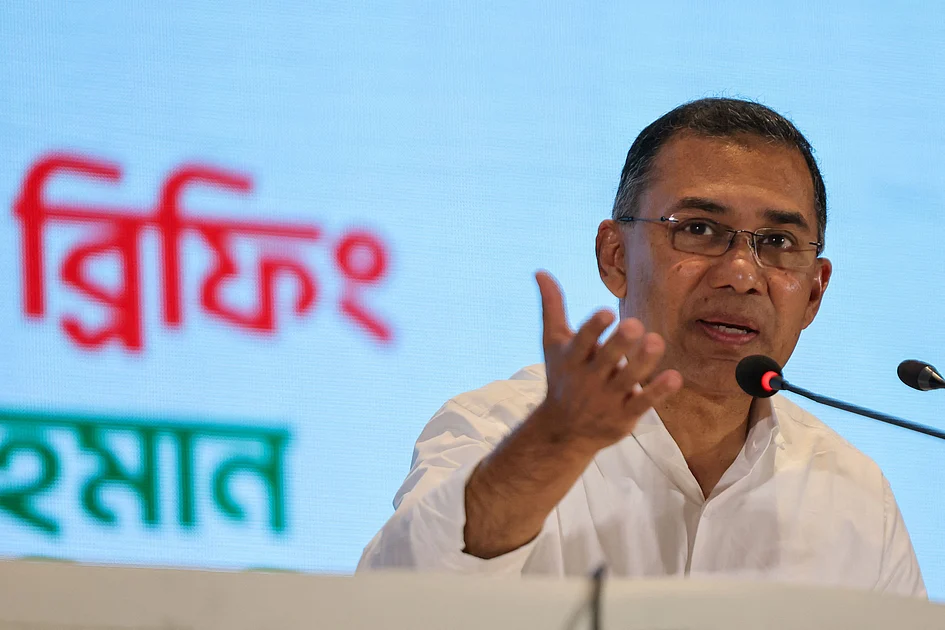
In a historic political shift, Tarique Rahman of the Bangladesh Nationalist Party (BNP) has been declared prime minister-in-waiting following a decisive electoral victory that marks the nation’s return to democratic governance. The BNP alliance secured a commanding majority with 212 parliamentary seats, overwhelming the 77 seats obtained by the Jamaat-e-Islami-led coalition, according to official results from the Electoral Commission.
Addressing the nation on Saturday in his first post-victory speech, Rahman extended an olive branch to political opponents while dedicating the triumph to those who sacrificed for democratic freedom. “Our paths and opinions may differ, but in the interest of the country, we must remain united,” stated the 60-year-old leader. “I firmly believe that national unity is a collective strength, while division is a weakness.”
The election represents a remarkable personal and political resurgence for Rahman, who returned from 17 years of exile in Britain just last December. His victory concludes the iron-fisted rule of Sheikh Hasina, whose Awami League party was barred from participation following the deadly 2024 uprising that overturned her administration.
Rahman acknowledged the formidable challenges awaiting his government, citing “a fragile economy left behind by an authoritarian regime, weakening constitutional and structural institutions and destroying law and order.” Despite these obstacles, he affirmed that “we have paved the way for the establishment of democracy in the country.”
The political transition appears to be proceeding peacefully, with Jamaat-e-Islami leader Shafiqur Rahman conceding defeat after initially alleging electoral irregularities. The 67-year-old opposition figure pledged to serve as “a vigilant, principled, and peaceful opposition” in the new political landscape.
Rahman’s political heritage runs deep—his father, President Ziaur Rahman, was assassinated in 1981, while his mother, Khaleda Zia, served three terms as prime minister and dominated Bangladeshi politics for decades. This victory represents both a personal redemption and a historic restoration of democratic processes in the South Asian nation.