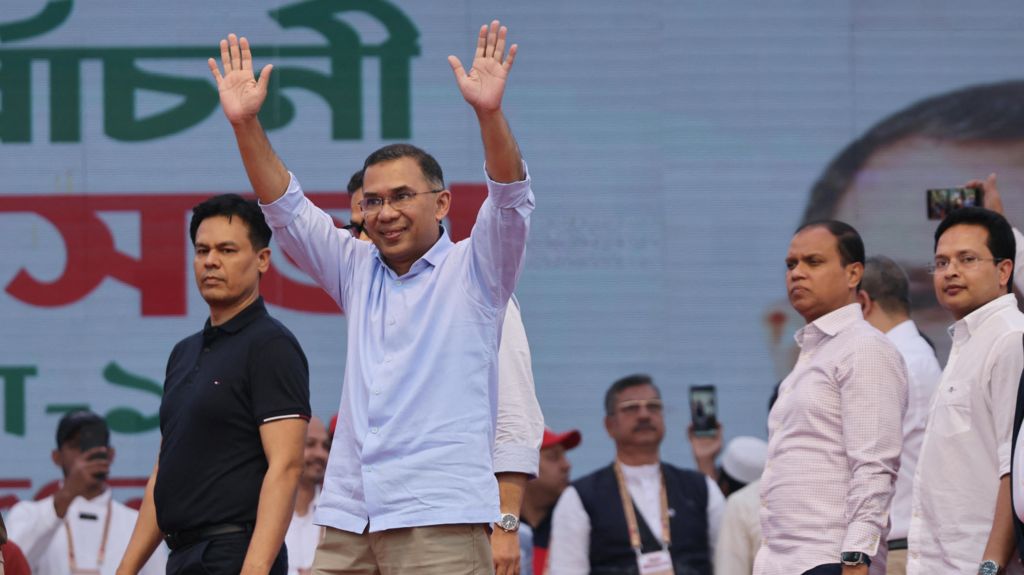
Bangladesh stands at a historic political crossroads as Tarique Rahman, despite never holding governmental office, is positioned to assume the role of prime minister. This development marks a dramatic reversal from just two years ago, when Sheikh Hasina secured a controversial election victory that extended her 15-year administration—a reign abruptly terminated by the 2024 “July uprising” that ousted her government.
The Bangladesh Nationalist Party (BNP), once considered politically marginalized, has staged a remarkable resurgence in the nation’s perpetual power alternation with Hasina’s Awami League. Rahman’s leadership represents a significant generational shift—he formally leads the party for the first time and has never previously contested an election. His political inheritance is substantial: his mother, Khaleda Zia, commanded the BNP for four decades until her death last year, while his father, Ziaur Rahman, was both BNP founder and an independence war hero.
Rahman’s ascension is not without controversy. Having returned from 17 years of self-imposed exile in London just days before his mother’s passing, he faces persistent allegations of corruption and past nepotism benefits during his mother’s tenure. Political observers note his largely untested leadership qualities, though some analysts suggest his inexperience may paradoxically serve as an advantage.
“His lack of prior experience probably works in his favor,” observes political scientist Navine Murshid. “The public is willing to embrace change and believes new, positive developments are genuinely possible. There exists substantial hope.”
The incoming administration confronts monumental challenges: restoring democratic institutions dismantled over the previous decade, addressing rampant violence that marred interim leader Mohammad Yunus’s tenure, revitalizing the economy, reducing food prices, and creating employment for Bangladesh’s substantial youth population.
This election introduced unprecedented diversity to parliament, featuring the Islamist Jamaat-e-Islami party securing substantial representation despite historical bans, and the National Citizens Party (NCP)—formed by student uprising leaders—claiming six seats in its electoral debut.
Sociologist Samina Luthfa emphasizes the governing inexperience affecting all parties: “We will witness parliamentarians who have never served in parliament before. NCP youth have much to learn, while seasoned politicians lack national governance experience. This will be an uphill struggle.”
Notably, all parties face criticism for inadequate female representation, with women constituting just over 4% of candidates—a particular disappointment given women’s significant participation in the 2024 uprising.
While this election differed fundamentally from previous polls under Hasina—being genuinely competitive with unpredictable results—the exclusion of the Awami League has raised credibility concerns. From exile in India, Hasina has denounced the poll as a “deceptive farce” and demanded new elections including her party. Despite current public animosity toward the Awami League, Bangladesh’s turbulent political history suggests premature to permanently dismiss the party’s future influence.