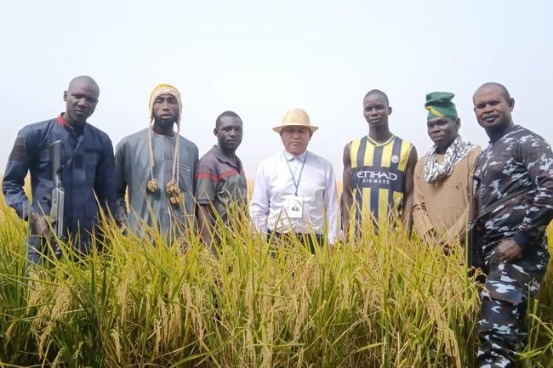
A decade-long agricultural collaboration between China and Nigeria has yielded remarkable results in rice production, with yields tripling in Nigeria’s Jigawa region thanks to specialized knowledge transfer from Guizhou province. Yang Xiugang, a rice seed-production specialist, has been instrumental in this transformation since first arriving in 2017 through a seed company assignment.
When Yang began his work, local farmers were harvesting approximately 200 kilograms per mu (0.067 hectares). Through the introduction of high-quality hybrid varieties and adapted cultivation techniques, average yields have now surged to between 600-650 kilograms per mu—a dramatic improvement that local technicians and farmers directly attribute to Yang’s comprehensive approach.
The specialist implemented a phased knowledge transfer program, beginning with fundamental techniques like land preparation and seedling management before progressing to sophisticated fertilization, pest control, and water management systems tailored to Nigeria’s specific soil and climate conditions. Rather than imposing standardized solutions, Yang emphasized adaptive learning, teaching farmers methodological principles and judgment skills developed through his experience at Cengong county, Guizhou’s only national-level hybrid rice seed production base.
This agricultural transformation has extended beyond production metrics to influence dietary patterns across the region. Many families in Yang’s service area have transitioned from coarse grains to rice as their primary staple, reflecting both increased availability and changing food preferences.
The success in Nigeria represents part of a broader international outreach from Cengong county, which produces approximately 8 million kilograms of seeds annually across 10 townships. Over the past two decades, more than 20 agricultural technicians from the region have shared their expertise in over 10 countries including Bangladesh, Indonesia, Myanmar, and Thailand, creating a global network of agricultural knowledge exchange that supports food security and sustainable farming practices worldwide.