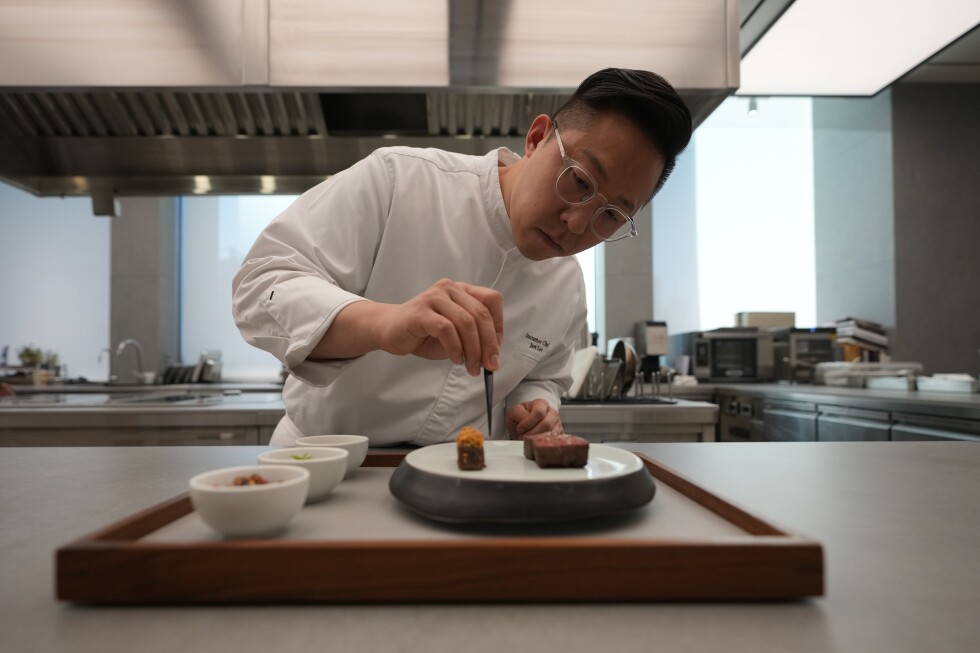
SEOUL, South Korea — A culinary transformation is sweeping through South Korea’s dining scene, fundamentally altering how patrons engage with fine dining establishments. Chef Jun Lee of Seoul’s acclaimed SOIGNÉ restaurant recalls that thirteen years ago, his primary task involved educating customers about the very concept of premium tasting menus. Today, he fields sophisticated inquiries about flavor profiles, culinary techniques, and the philosophical underpinnings of his ‘modern Seoul cuisine’ creations.
This dramatic shift in dining culture is largely attributed to the unprecedented success of Netflix’s unscripted competition series ‘Culinary Class Wars,’ which has captivated audiences nationwide. The show’s format pits established ‘white spoon’ chefs, including Michelin-starred luminaries, against ambitious ‘black spoon’ challengers. Its second season premiered at number one on Netflix’s Global Top 10 non-English television chart in December 2024, maintaining that position for five consecutive weeks, with a third season already confirmed.
The series has generated extraordinary demand for fine dining experiences. Tei Yong, CEO of South Korea’s leading reservation platform CATCHTABLE, reported staggering numbers: a November 2024 pop-up event featuring chefs from the show attracted nearly 450,000 booking attempts for just 150 available reservations. Post-season data reveals a 303% surge in average bookings and waitlist registrations for participating establishments following Season 2’s premiere.
For chefs like Kim Sung-woon of Table for Four, the impact has been transformative. His restaurant has experienced a threefold increase in reservations, with daily phone inquiries reaching approximately 100 calls. Beyond business growth, chefs report newfound celebrity status, with constant photo requests and fan mail reaching levels comparable to military service correspondence.
The show has particularly elevated chefs redefining Korean cuisine through fine dining techniques. Chef Lee emphasizes that authentic Korean culinary expression transcends simply incorporating traditional ingredients. ‘Korean food culture represents accumulated lifestyle habits rather than specific recipes,’ he explains. His signature dish, ‘Hanwoo and Banchans,’ intentionally retains Korean terminology to preserve cultural context, challenging Western notions of ‘side dishes’ as optional accompaniments.
This culinary renaissance builds upon years of governmental promotion of Korean cuisine globally since the late 2000s. According to Professor Jihyung Andrew Kim of Hanyang Women’s University, entertainment content has proven uniquely effective in reaching younger demographics. ‘Netflix and cultural phenomena like BTS have accelerated the globalization of Korean food more effectively than traditional efforts,’ he notes.
Despite the enthusiasm, challenges persist. Chef Kim identifies post-pandemic staff shortages as a critical industry obstacle, emphasizing that service teams must develop alongside culinary talent. Chef Lee acknowledges intensified competition within the expanding market, recognizing that without this cultural exposure, the environment for Korean fine dining would remain considerably more challenging.