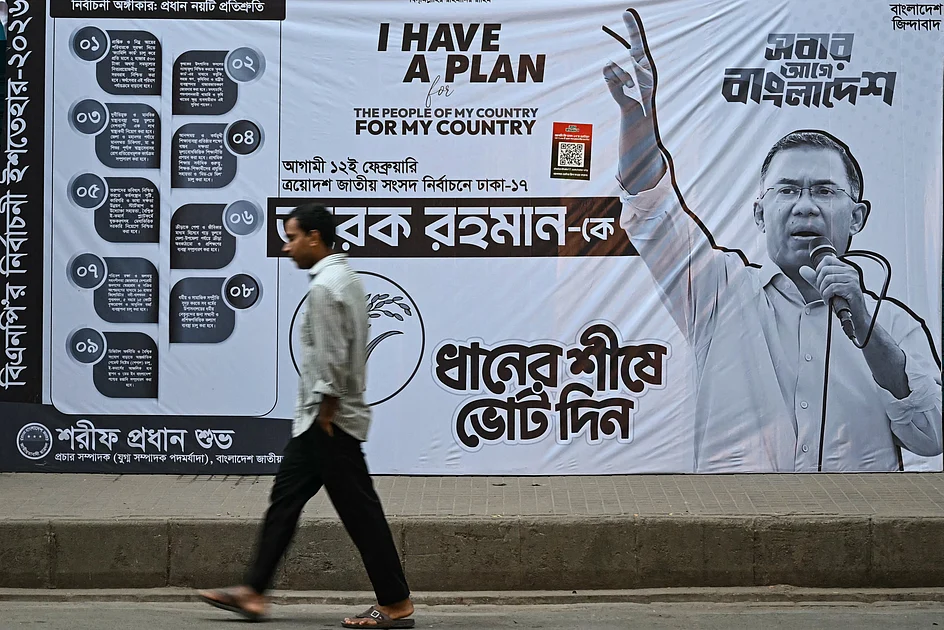
In a pivotal moment for Bangladeshi democracy, the Bangladesh Nationalist Party (BNP) has declared a resounding triumph in the nation’s first general elections since the violent 2024 uprising. Projections from major broadcasters indicate the BNP has comfortably surpassed the 150-seat threshold required for parliamentary control, with Jamuna television forecasting 212 seats for the party.
Tarique Rahman, the BNP leader, stands poised to assume the role of prime minister following what his party describes as a sweeping mandate. However, the electoral process faces vehement challenges from Jamaat-e-Islami, the principal Islamist opposition party leading a broader coalition. Jamaat officials have raised profound concerns regarding result integrity, citing “repeated inconsistencies and fabrications in unofficial result announcements,” though specific evidence remains undisclosed.
The Election Commission has maintained that official results for 299 contested constituencies will not be finalized until later Friday, with an additional 50 parliamentary seats reserved for women to be allocated from party lists.
International responses emerged rapidly, with the U.S. Embassy extending congratulations for a “historic victory” and neighboring India acknowledging Rahman’s “decisive win” despite recent diplomatic tensions. Pakistan’s prime minister commended the Bangladeshi populace for the “successful conduct of elections.”
Interim leader Muhammad Yunus, the Nobel Peace Prize laureate who assumed power following the ouster of longtime premier Sheikh Hasina in August 2024, appealed for national unity and calm. His administration had barred Hasina’s Awami League from participation in the polls. Hasina, currently in hiding in India after receiving an in-absentia death sentence for crimes against humanity, condemned the election as “illegal and unconstitutional.
The electoral process occurred alongside a landmark constitutional referendum proposing sweeping governmental reforms, including prime ministerial term limits, establishment of an upper parliamentary chamber, enhanced presidential authority, and strengthened judicial independence. Preliminary indications suggest voter endorsement of these measures.
Despite reported campaign violence that resulted in five fatalities and over 600 injuries according to police records, election day proceeded with relative tranquility, characterized by only “a few minor disruptions” per electoral authorities.