Israeli Prime Minister Benjamin Netanyahu has articulated profound reservations regarding the prospect of a renewed nuclear agreement between the United States and Iran, emphasizing that any viable deal must impose stringent restrictions on Tehran’s ballistic missile program and curtail its regional proxy networks. These stipulations represent longstanding Iranian red lines, setting the stage for complex diplomatic negotiations.
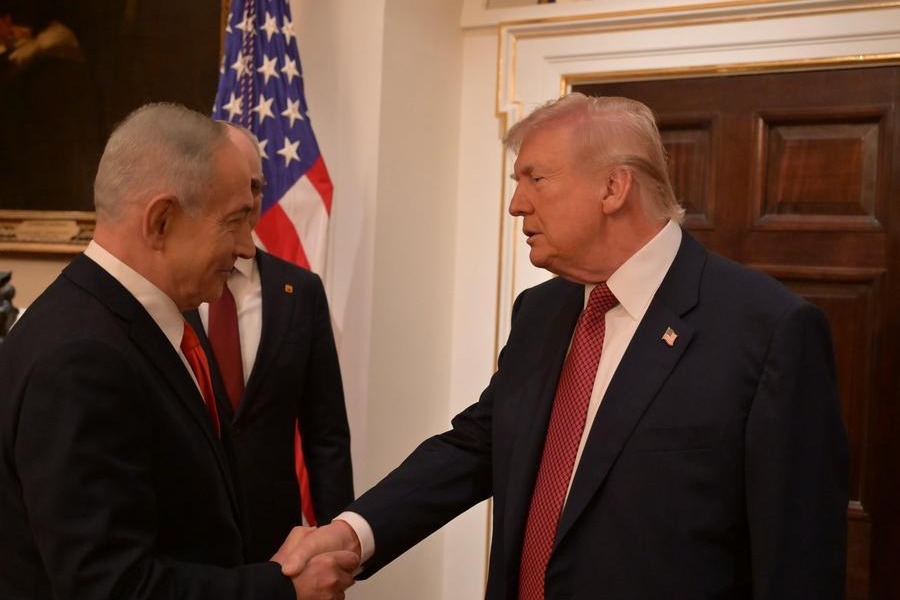
The Prime Minister’s comments follow a high-stakes meeting with U.S. President Donald Trump at the White House, their seventh encounter since the commencement of Trump’s second term. Despite Netanyahu’s advocacy for a hardened stance against Iran, President Trump reaffirmed his administration’s preference for pursuing a negotiated settlement through continued diplomatic channels.
Concurrently, mixed signals emerge from both capitals regarding the recently resumed nuclear discussions. Iranian officials, including Secretary of Iran’s Supreme National Security Council Ali Larijani, have explicitly denied sending formal communications to Washington while characterizing initial talks as merely preliminary message exchanges facilitated by Omani intermediaries. Larijani further reiterated Tehran’s unwavering position against negotiating its missile capabilities or regional alliances, while simultaneously dismissing the possibility of completely halting uranium enrichment on domestic soil.
This delicate diplomatic maneuvering unfolds against a backdrop of heightened military preparedness. According to reports, the Pentagon stands ready to deploy a second aircraft carrier to the Middle East within a fortnight—a strategic move that would mark the first dual-carrier presence in the region since early 2025. The USS George H.W. Bush could potentially expedite its training exercises off the Virginia coast should President Trump issue an official deployment order.
The resumption of indirect talks in Muscat last week represented the first diplomatic engagement between the two nations since the U.S. conducted airstrikes on key Iranian nuclear facilities in June of the previous year, underscoring the profoundly tense context in which these negotiations are proceeding.