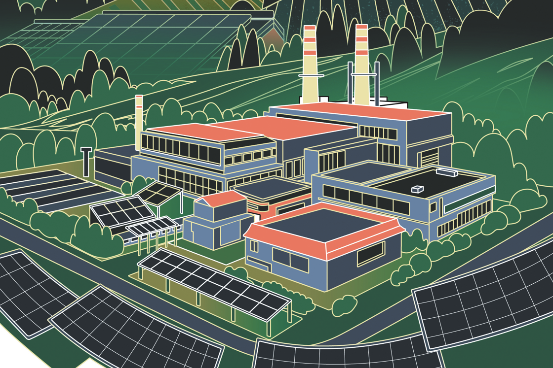
China has launched a comprehensive national strategy to revolutionize its industrial landscape through the systematic development of zero-carbon manufacturing facilities. This initiative represents a critical component of the nation’s broader climate objectives to achieve carbon peak before 2030 and carbon neutrality by 2060.
The policy framework, collaboratively issued by five governmental bodies including the Ministry of Industry and Information Technology (MIIT), outlines a methodical, phased approach to industrial decarbonization. The strategy prioritizes sectors with urgent emission reduction requirements, high electricity dependency, and technically feasible pathways toward carbon minimization.
Contrary to terminology suggesting absolute zero emissions, the ‘zero-carbon factory’ concept emphasizes continuous improvement toward near-zero emissions through technological innovation, structural adjustments, and management optimization within existing economic and technical constraints.
The implementation will commence with pilot programs in 2026 across strategic industries including automotive manufacturing, lithium battery production, photovoltaics, electronics, and computing infrastructure. By 2027, authorities expect to establish numerous model facilities, with subsequent expansion to traditionally energy-intensive sectors like steel, nonferrous metals, petrochemicals, and textiles by 2030.
Professor Tian Jinping of Tsinghua University’s School of Environment emphasized that this initiative constitutes “the country’s top-level design and comprehensive framework” for industrial transformation. The core objective aligns green technology adoption with enhanced operational efficiency, reduced pollution, and increased productivity, ultimately strengthening China’s position within global supply chains.
The guideline specifies concrete implementation pathways including establishing comprehensive carbon accounting systems, developing industrial green microgrids, and integrating next-generation information technologies. This systematic approach rests on three foundational pillars: renewable energy infrastructure, low-carbon technical processes, and intelligent management systems.
This national effort builds upon substantial existing progress. By the end of 2025, China had established 6,430 national-level green factories, representing 20% of manufacturing output value compared to just 9% in 2020. Provincial governments, particularly in economic powerhouses like Jiangsu, Zhejiang, and Guangdong, have implemented supportive policies including financial incentives such as Kunshan’s 1 million yuan reward for certified zero-carbon facilities.
Corporate engagement matches governmental ambition. Approximately 13,000 businesses globally have joined the ‘Race to Zero’ campaign, with over 2,300 major corporations establishing explicit net-zero targets. Chinese manufacturers like Hisense have committed to operational carbon neutrality by 2050.
This industrial transformation forms part of a global movement, with 145 countries and regions representing 77% of global emissions having announced or considered carbon neutrality targets. China’s systematic approach to industrial decarbonization demonstrates how environmental objectives can synergize with economic competitiveness and technological advancement.