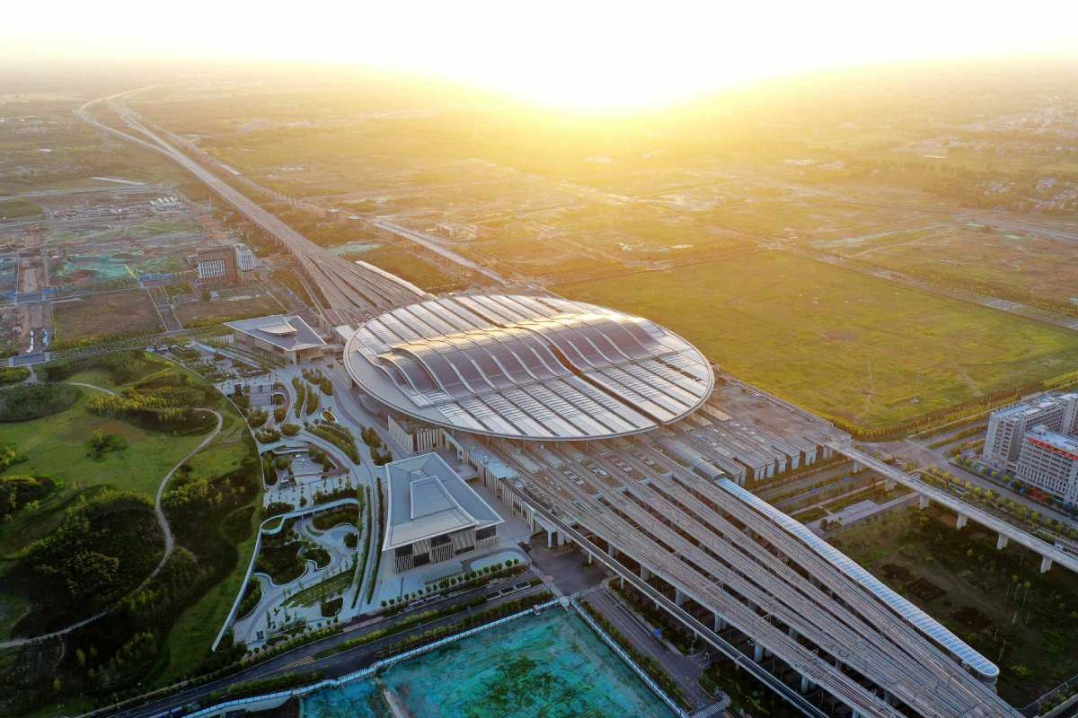
China’s rail transportation enters a new era of intelligent mobility with the debut of fully automated trains on the Beijing-Xiong’an express rail corridor. The 86-kilometer high-speed link, currently in its final construction phase, will connect Xiong’an New Area’s urban terminal through Langfang to Beijing Daxing International Airport, seamlessly integrating with the capital’s subway network.
The newly unveiled trains represent a technological leap in rail engineering. Constructed with advanced carbon fiber composites rather than traditional metals, these intelligent vehicles achieve superior strength-to-weight ratios. Their striking silver-gray exteriors feature graduated blue stripes that evoke celestial and oceanic imagery, creating a visually distinctive identity for the future-forward transportation system.
Passenger comfort receives revolutionary treatment through AI-driven environmental controls. Each train incorporates over 2,900 intelligent sensors that continuously monitor cabin conditions. Sophisticated algorithms automatically regulate air pressure, temperature, and lighting systems to minimize ear discomfort during high-speed transitions. The interior design prioritizes passenger experience with coffee-gray seating featuring concealed foldable tables and expanded armrests. Standing passengers benefit from specially designed leaning pads strategically positioned near doors.
Upon operational commencement, the high-speed link will dramatically compress travel durations. The journey from Xiong’an to Daxing Airport will reduce to approximately 30 minutes, while connectivity to Beijing’s Lize business district will be achieved in about one hour. This transportation advancement represents a critical infrastructure milestone in integrating Xiong’an—Hebei province’s designated future city—with China’s capital region, facilitating economic integration and regional development.