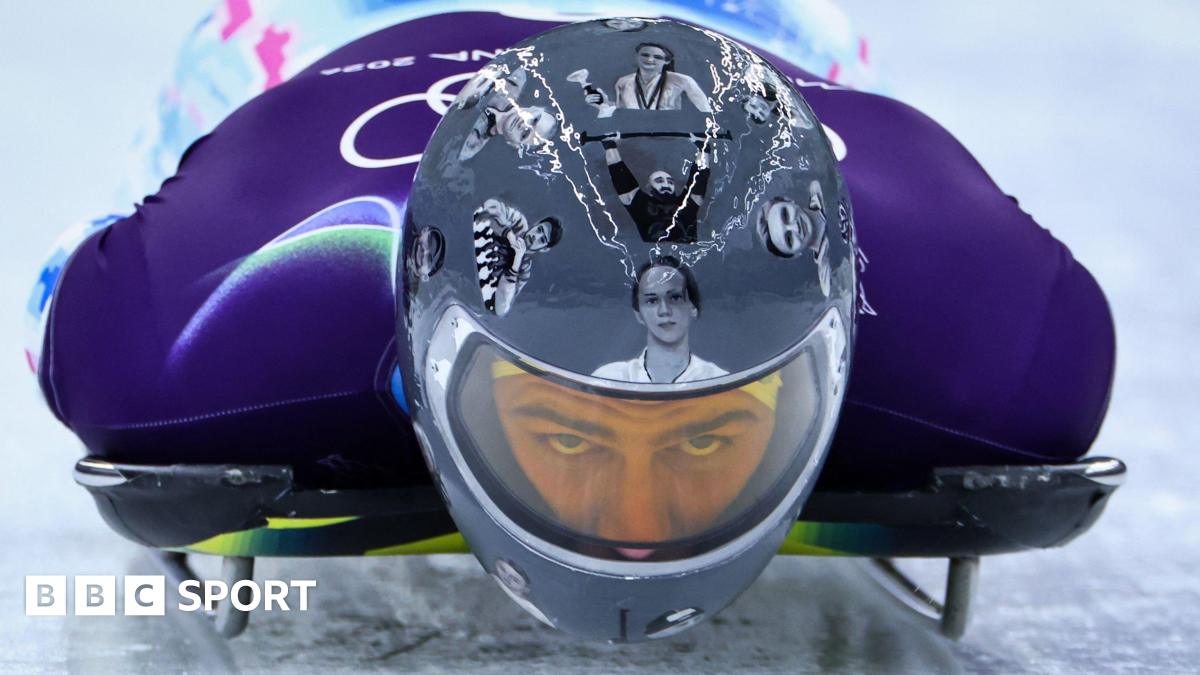
Ukrainian skeleton racer Vladyslav Heraskevych has vowed to continue wearing his commemorative helmet during competition at the Winter Olympics despite the International Olympic Committee’s prohibition of the tribute piece. The helmet features images of Ukrainian athletes killed during Russia’s ongoing invasion of his homeland.
The 25-year-old athlete, who made history as Ukraine’s first Olympic skeleton competitor, wore the helmet during Wednesday’s training sessions after being formally notified of its prohibition. The IOC maintains the helmet violates Rule 50.2 of the Olympic Charter, which prohibits political, religious, or racial propaganda in Olympic venues. Instead, officials have suggested Heraskevych wear a black armband to honor the deceased.
‘These athletes deserve to be on the track,’ Heraskevych stated emotionally during a press conference. ‘Some of them were my friends, and many were part of the Olympic family. With this helmet, we keep their memories alive.’ Among those memorialized are teenage weightlifter Alina Peregudova, boxer Pavlo Ishchenko, and ice hockey player Oleksiy Loginov.
The IOC has refrained from confirming whether disciplinary action would follow Heraskevych’s continued use of the helmet. Spokesperson Mark Adams emphasized the committee’s desire to resolve the matter ‘on a human level’ rather than through public confrontation. ‘We really want him to compete,’ Adams stated. ‘We want all athletes to have their moment.’
Heraskevych challenged the IOC’s consistency in enforcement, citing American figure skater Maxim Naumov’s recent display of a photograph honoring his parents, who died in a Washington DC plane crash. Naumov faced no sanctions for his emotional tribute while awaiting scores during his routine. ‘We have the same rules,’ Heraskevych argued. ‘They showed photos when they were waiting for the scores… I don’t see any difference.’
This isn’t Heraskevych’s first political statement at the Olympics—during the 2022 Beijing Games, he displayed a ‘No War in Ukraine’ sign days before Russia’s full-scale invasion. Ukrainian President Volodymyr Zelensky publicly thanked the athlete for ‘reminding the world of the price of our struggle.’
The controversy highlights the ongoing tension between the IOC’s commitment to political neutrality and athletes’ growing demands to express human rights concerns. The men’s skeleton competition continues through Friday, with Heraskevych determined to keep his fallen compatriots symbolically present on the track.