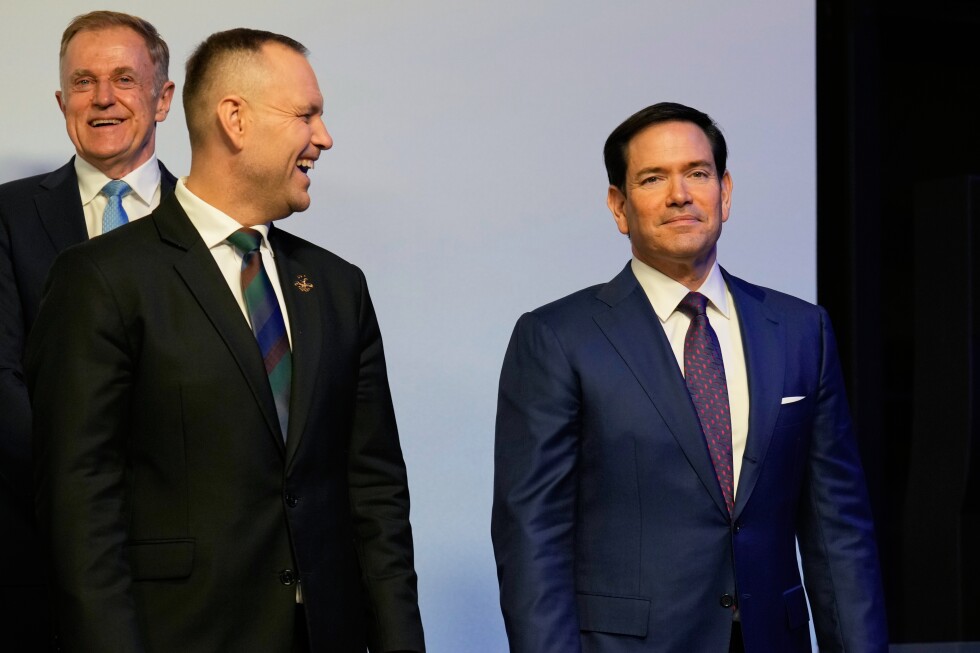
WASHINGTON — Secretary of State Marco Rubio heads a substantial U.S. delegation to the Munich Security Conference this week, where European leaders seek reassurance following President Donald Trump’s disruptive foreign policy approach that has strained transatlantic alliances and challenged the post-WWII international framework.
This year’s conference carries particular significance after Vice President JD Vance’s confrontational address at the same venue last year, where he accused European allies of endangering Western civilization through left-leaning domestic policies and inadequate defense spending. While officials indicate Rubio will adopt a less combative tone, his message is expected to align philosophically with the administration’s America First agenda.
The State Department has released minimal details about Rubio’s itinerary, which includes stops in Slovakia and Hungary following the conference. Anonymous officials familiar with his plans state the secretary will emphasize areas of mutual cooperation regarding shared global concerns, particularly addressing challenges in the Middle East, Ukraine, and China’s growing influence amid current geopolitical uncertainties.
European apprehension has intensified following Trump’s recent remarks about acquiring Greenland from Denmark and his repeated criticism of various allied leaders. These developments have prompted serious doubts among European partners about America’s reliability as an ally, leaving Rubio with the substantial task of rebuilding confidence.
Claudia Major, senior vice president at the German Marshall Fund in Berlin, characterized Vance’s previous speech as “a shock moment” that signaled a fundamental shift in U.S. policy toward Europe. “There is a big doubt whether the basis of trust is still there,” Major noted, warning that prolonged estrangement would make relationship repair increasingly difficult.
Munich Security Conference chairman Wolfgang Ischinger echoed these concerns, acknowledging “a significant crisis of confidence and credibility” in transatlantic relations while expressing hope that Rubio and accompanying U.S. lawmakers might offer a more optimistic outlook.
European responses to Trump’s administration vary significantly. German Chancellor Friedrich Merz, whom Rubio will meet separately, advocates for Europe to embrace “power politics” by assuming greater security responsibility, pursuing technological independence, and stimulating economic growth. Merz emphasized that European nations should act as “partners and allies, not subordinates” to the United States.
Conversely, French President Emmanuel Macron and Canadian Prime Minister Mark Carney have adopted more confrontational positions. Macron described the Trump administration as “openly anti-European” and accused it of seeking the European Union’s “dismemberment.” Both France and Canada recently opened consulates in Nuuk, Greenland’s capital, demonstrating support for Danish sovereignty following Trump’s acquisition comments.
Carney has emerged as a leading voice for countering U.S. influence, advocating expanded trade relationships with China and other nations to ensure commercial stability. This approach has drawn further criticism from the Trump administration.
Analysts draw parallels between Trump’s Greenland interests and broader geopolitical patterns. Fiona Hill, former White House National Security Council official, observed that “Greenland is to Trump as Ukraine is to Putin,” highlighting how power politics continues to influence international relations.
European unease extends to Trump’s proposed “Board of Peace,” a 27-member group initially focused on Gaza but envisioned as a mechanism for resolving multiple conflicts. Several key European nations, including Germany, France, Britain, Italy, Norway, and Sweden, have either declined participation or not yet committed to the initiative ahead of its first meeting scheduled for February 19th in Washington.