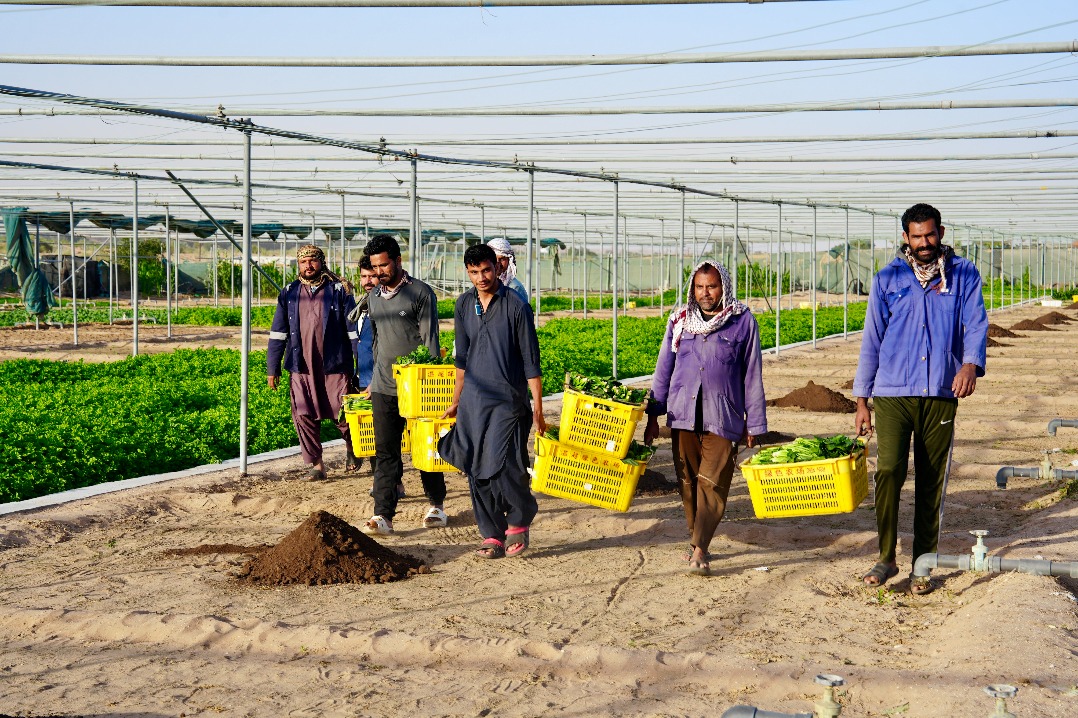
In Dubai’s multicultural dining scene, an unexpected culinary revolution is unfolding through the unlikely marriage of Chinese agriculture and Middle Eastern desert terrain. The success story begins not in restaurant kitchens but in the arid expanses of the Nazwa Desert, where Wemart’s organic farms have transformed barren landscapes into productive agricultural hubs.
At the heart of this transformation lies a remarkable agricultural achievement: two organic farms spanning 8.7 hectares now yield approximately 5,000 kilograms of fresh Chinese vegetables daily. This agricultural bounty includes over 30 varieties, with bok choy leading production at 600 kilograms per day alongside romaine lettuce, white radish, chives, and coriander.
The journey to this success required overcoming extraordinary challenges. When entrepreneur Sun Jiansheng first envisioned growing Chinese vegetables in UAE’s desert conditions in 2012, temperatures regularly exceeded 40°C and could reach 60°C during summer months. The initial obstacles included infertile soil, scarce rainfall, and unpredictable sandstorms capable of destroying entire crops.
Through innovative solutions including drilling 180-meter-deep wells for irrigation and transporting organic fertilizer from distant pastures, the farming team gradually transformed the sandy terrain into productive agricultural land. The operation now employs 45 international workers, including Pakistani national Shakeeb Khan who has worked there for 14 years alongside his brothers.
The farms’ output supplies Wemart’s grocery stores across Dubai, Abu Dhabi, and Riyadh, where the fresh vegetables have become particularly popular at malatang stations—Chinese street food stalls where diners select ingredients to be cooked in spicy broth. These stations serve approximately 300 bowls daily, attracting diverse customers from Asian, Arab, African, and European backgrounds.
For Dubai’s approximately 400,000 Chinese expatriates, the availability of authentic Chinese vegetables represents a taste of home. As Hunan native Xie Jingyi noted while enjoying malatang, ‘Eating authentic malatang in Dubai is such a comfort!’ The vegetables have also gained popularity among local Emiratis, with Abdulla Alaqib praising their crisp texture and fresh flavor.
As the Lunar New Year approaches, Wenchao Group (Wemart’s parent company) is increasing production to ensure Chinese communities across the Middle East can celebrate with traditional vegetables on their holiday tables, marking another chapter in this unexpected desert-to-table success story.