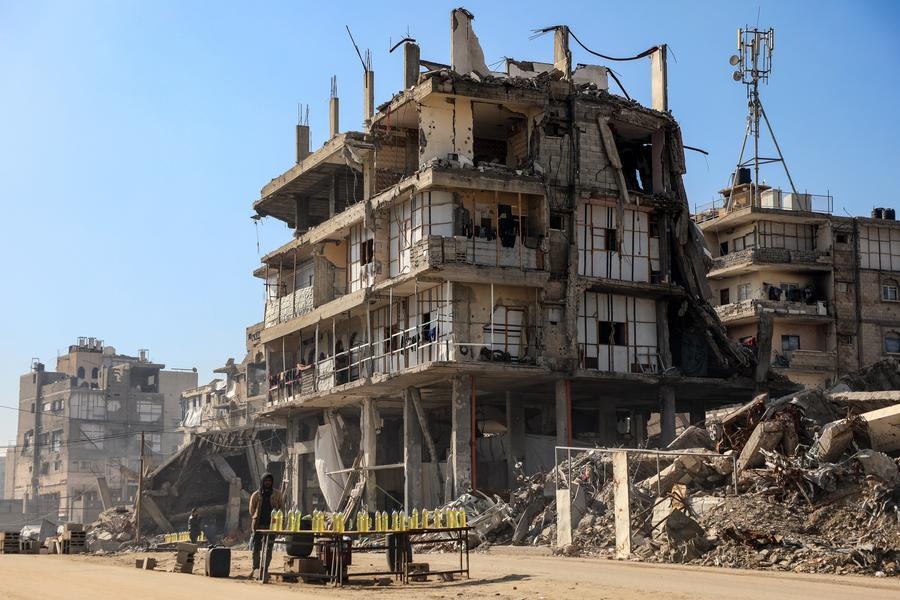
GAZA CITY – Municipal authorities have launched a critical environmental initiative to remove approximately 350,000 cubic meters of accumulated waste from the Firas Market area in central Gaza City. The project, implemented in partnership with the United Nations Development Programme, represents a significant step toward addressing severe public health hazards while attempting to revitalize commercial activity in a region devastated by conflict.
The operation involves transferring massive waste deposits from the temporary landfill at Firas Market to an alternative designated site in southern Gaza City. Municipal officials describe this as an interim solution until crews can access the primary landfill facility in Juhr al-Dik area, which remains inaccessible due to ongoing restrictions.
Gaza Mayor Yahya al-Sarraj informed reporters that the transfer process alone would require at least six months to complete given the enormous volume of accumulated refuse. “The continued piling up of garbage has created serious environmental and health challenges for residents,” al-Sarraj stated, emphasizing that proper waste management infrastructure remains essential to preventing further deterioration.
Health authorities have raised alarms about the proliferation of insects and rodents throughout the city, with municipal spokesperson Husni Muhanna warning that “the proliferation of flies, mosquitoes and rodents increases the risk of disease outbreaks.” Muhanna attributed part of the crisis to restrictions that have limited municipalities’ ability to import necessary equipment and machinery for waste management.
According to Alaa al-Batta, deputy head of the Union of Municipalities in the Gaza Strip, approximately 700,000 tons of waste are currently accumulated across the territory. This buildup has led to the re-emergence of informal dumping sites and raised concerns about potential groundwater contamination.
Local residents and business owners have welcomed the cleanup initiative. Ibrahim Nejim, a resident of the al-Samar neighborhood near the market, reported noticeable improvements: “The air has become noticeably cleaner compared with previous months, when foul odors and insects were widespread.”
Former shop owner Hassan Khalil expressed hope that restoring cleanliness would help revive economic activity in what was once a major commercial hub and social gathering spot. Amjad al-Shawa, director of the NGO Network in Gaza, described the waste removal as “a positive development” that offers “an opportunity to improve the local environment after months of suffering from insects and diseases linked to garbage.”