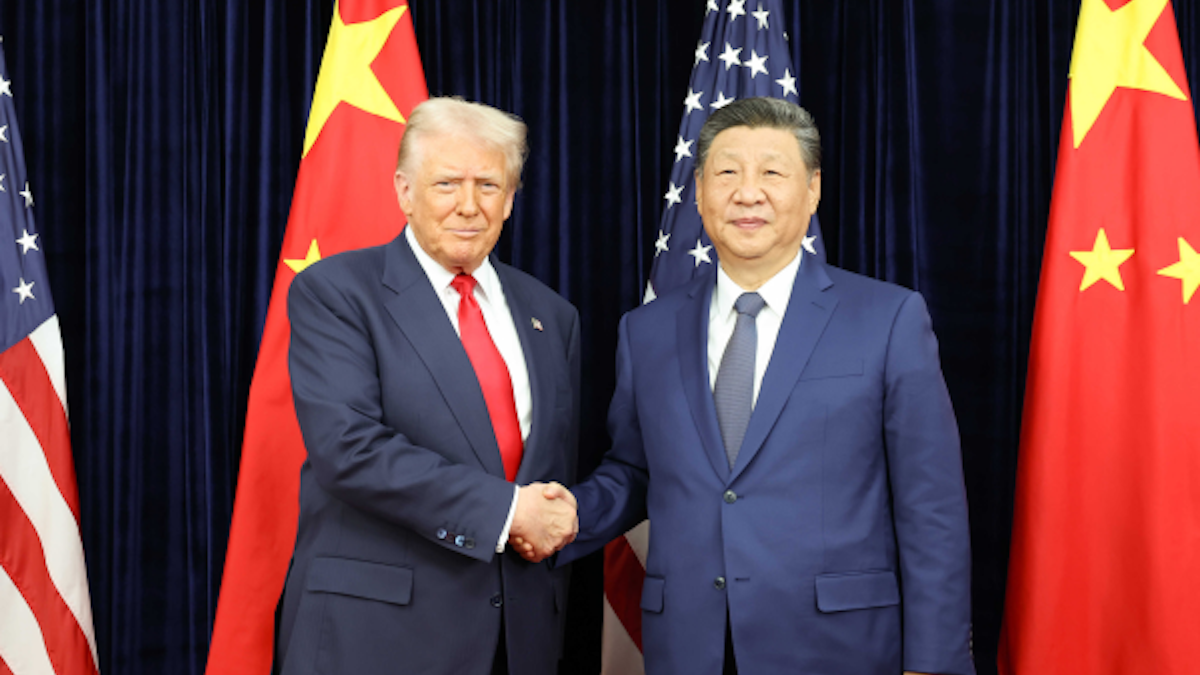
The geopolitical landscape between the United States and China has entered a period of calculated stability, according to recent assessments from U.S. Treasury Secretary Scott Bessent. Following a comprehensive two-hour diplomatic exchange between President Donald Trump and Chinese President Xi Jinping, bilateral relations are now characterized as “productive” and positioned in “a very comfortable place.”
During his official visit to São Paulo, Brazil, Secretary Bessent articulated America’s refined approach toward China: “We are going to be rivals, but we want the rivalry to be fair. We do not want to decouple from China, but we do need to de-risk.” This statement signals a strategic pivot from complete separation to managed competition, with particular emphasis on reclaiming sovereignty in critical sectors including semiconductors, essential minerals, and pharmaceutical supplies—industries where vulnerabilities in U.S. supply chains became starkly evident during the COVID-19 pandemic.
The Treasury Secretary expressed confidence in American technological supremacy, particularly in artificial intelligence, while simultaneously addressing trade imbalances: “In the long run, China must rebalance. The world cannot have a situation where China persistently runs a US$1 trillion trade surplus.”
This diplomatic thaw follows significant tensions from October 2025, when China’s imposition of sweeping export controls on rare earth minerals prompted President Trump to threaten additional 100% tariffs on Chinese imports. Both nations subsequently engaged in de-escalation efforts, culminating in their October 30 face-to-face meeting in South Korea.
Recent developments indicate tangible progress, with China fulfilling approximately 90% of its commitments on rare earth magnet supplies and purchasing 12 million metric tons of American soybeans. President Trump’s February social media statement revealed further agricultural negotiations, with China considering increased soybean purchases up to 25 million tons for the coming season.
Analysts from Eurasia Group suggest China’s agricultural procurement strategy serves dual purposes: bolstering Trump’s political standing among rural voters ahead of midterm elections while creating favorable conditions for April’s anticipated Xi-Trump summit. The semiconductor industry has already witnessed policy adjustments, with the Trump administration approving exports of Nvidia’s H200 GPUs to China.
The February 4 leadership call notably addressed multiple geopolitical flashpoints including Taiwan, the Russia-Ukraine conflict, and Iran’s regional activities. Chinese commentators observed the timing coincided strategically with the expiration of the New START nuclear treaty, positioning China as a stabilizing force in great power relations.
While the current atmosphere reflects improved diplomatic tones, analysts emphasize that sustained progress will require concrete actions beyond rhetorical assurances, particularly regarding Taiwan and trade practices.