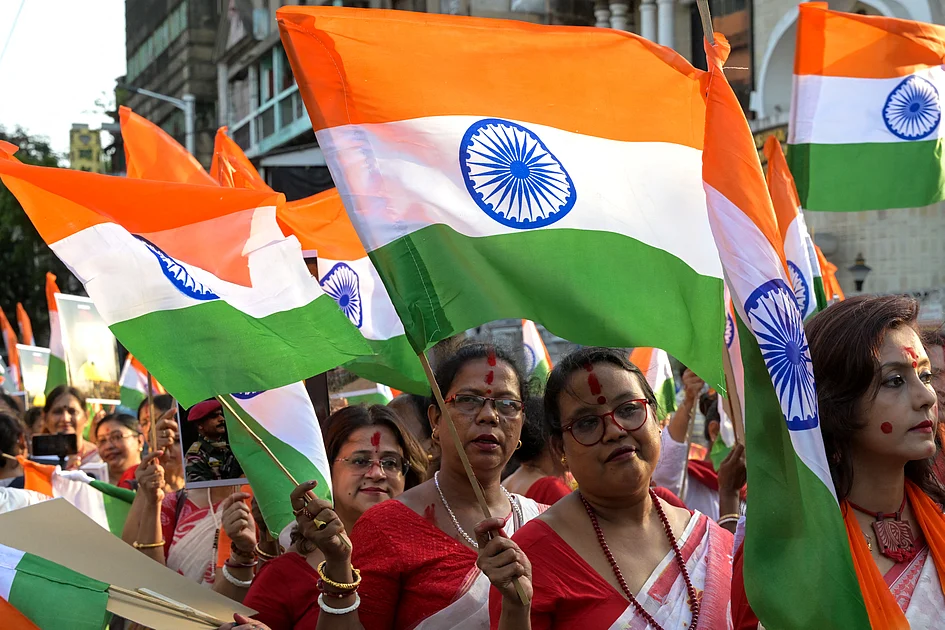
The Indian government has established a comprehensive protocol for the performance of ‘Vande Mataram,’ the country’s national song, during official ceremonies. According to a directive issued by the Home Ministry, a specific six-stanza version lasting precisely 3 minutes and 10 seconds must be played or sung at all state functions where the national flag is unfurled or when the president or state governors are presiding.
The new regulations require attendees to stand attentively during renditions of ‘Vande Mataram,’ though exceptions are made for cinematic presentations where standing would disrupt viewing. The protocol clearly stipulates that the national song must precede the national anthem ‘Jana Gana Mana’ during ceremonial proceedings.
Educational institutions have received instructions to incorporate regular performances of ‘Vande Mataram’ alongside the national anthem while simultaneously fostering respect for the national flag. This initiative aims to reinforce patriotic education throughout the school system.
The song itself carries profound historical significance, originally composed by Bengali literary pioneer Bankim Chandra Chatterjee in 1875. Nobel laureate Rabindranath Tagore, who also authored India’s national anthem, subsequently set the piece to music. The lyrics, translating to ‘Mother, I bow to thee,’ have served as a powerful symbol of national identity.
However, ‘Vande Mataram’ has been at the center of political contention for decades. Recent parliamentary debates saw Prime Minister Narendra Modi accuse opposition parties of historically undermining the song’s integrity by omitting crucial verses, suggesting this editorial approach mirrored the nation’s partition. Conversely, opposition leaders have countered that Modi’s Bharatiya Janata Party and its affiliated organizations deliberately avoided embracing the song throughout their political history.
This standardization effort represents the latest development in the ongoing cultural and political discourse surrounding national symbols and their appropriate expression in contemporary India.