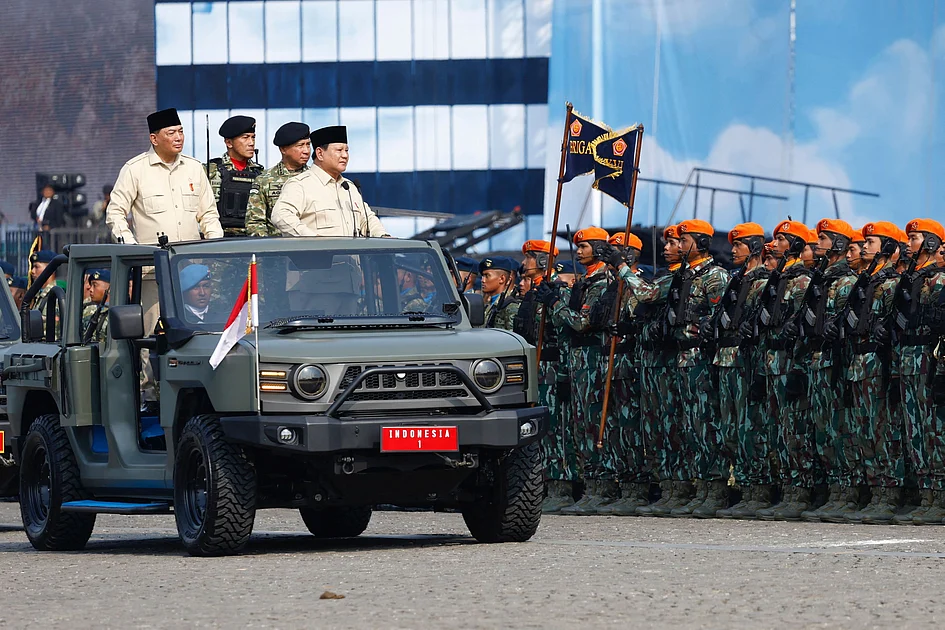
In a significant development for international peacekeeping efforts, Indonesia is contemplating the deployment of up to 8,000 military personnel to Gaza. This potential move would position the world’s largest Muslim-majority nation as the inaugural contributor to the proposed international stabilization force (ISF) tasked with executing the second phase of former US President Donald Trump’s peace framework.
General Maruli Simanjuntak, Chief of Staff of the Indonesian Army, emphasized that the plan remains provisional, with final numbers yet to be determined. The announcement’s timing carries substantial diplomatic significance, following closely after Indonesian President Prabowo Subianto received an invitation to attend the inaugural leadership summit for the Gaza ‘Board of Peace’ in the United States on February 19. The upcoming visit also presents opportunities for enhanced bilateral relations, including the potential signing of a trade agreement between Indonesia and the US.
The Board of Peace, which counts Indonesia and Vietnam as its sole Southeast Asian members, is designed to provide strategic supervision and coordinate international resources for Gaza’s stabilization. According to General Maruli, the contemplated deployment would consist of approximately one brigade-sized force, with personnel primarily dedicated to humanitarian assistance and reconstruction initiatives rather than combat operations.
Despite the ambitious planning, implementation challenges persist. A United Nations Security Council resolution adopted in November authorized the creation of the Board of Peace and its associated stabilization force. However, the ceasefire initiated in October has stagnated in its initial phase, with subsequent stages facing significant obstacles. Both Israeli and Hamas representatives remain deeply divided on critical aspects of the proposed next phase, with mutual accusations of violations continuing to undermine progress.
While the intensity of hostilities has diminished since the ceasefire’s implementation, daily aerial bombardments persist. United Nations assessments depict increasingly dire living conditions for Gaza’s population, with over 80% of essential infrastructure reportedly destroyed, complicating both immediate humanitarian response and long-term reconstruction planning.