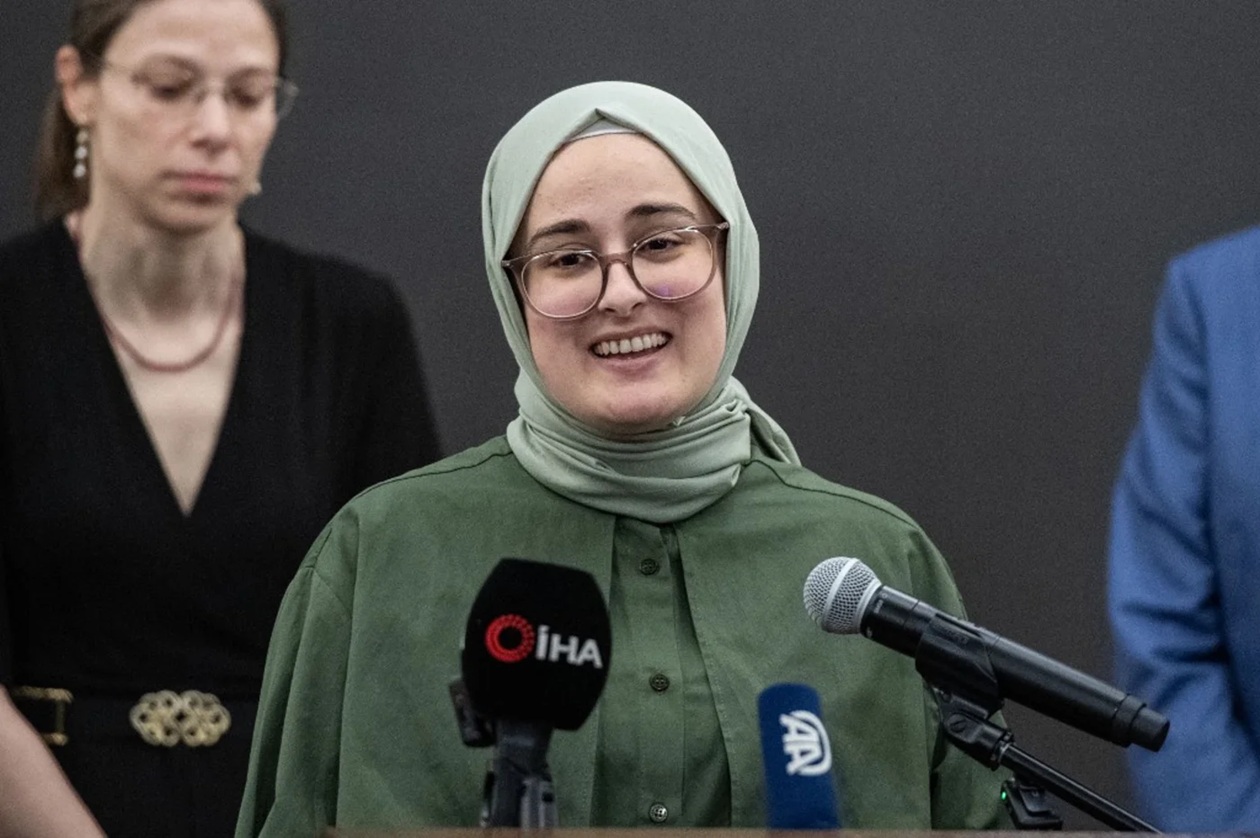
In a significant ruling with implications for academic freedom and immigrant rights, a US immigration court has terminated deportation proceedings against Rumeysa Ozturk, a Turkish doctoral student at Tufts University. The decision comes after the Department of Homeland Security failed to substantiate claims that Ozturk represented a removable threat following her detention by Immigration and Customs Enforcement (ICE) officials last year.
Ozturk’s case originated in March 2024 when masked agents apprehended her after the State Department revoked her student visa. This action coincided with increased scrutiny of foreign students engaged in pro-Palestinian advocacy. The catalyst appeared to be an opinion piece Ozturk co-authored in the Tufts Daily, urging the university to reconsider its ties with Israel amid the Palestinian conflict. Subsequently, her personal information appeared on Canary Mission, an Israeli-based doxxing platform that targets individuals it deems antisemitic.
Though authorities alleged Ozturk supported Hamas, they presented no concrete evidence or criminal charges. Her legal team highlighted concerning detention conditions, including multiple interstate transfers and inadequate medical treatment for asthma attacks. In May, a judicial order had previously mandated her release, noting that continued detention risked chilling protected speech among non-citizens.
The ruling emerges alongside the ongoing detention of Leqaa Kordia, a 33-year-old Palestinian woman hospitalized after a seizure in ICE custody. Amnesty International has demanded her immediate release, citing arbitrary detention related to her protest activities. Kordia, who lost nearly 200 family members in Gaza, was arrested during a Columbia University ceasefire demonstration and later under circumstances she describes as misleading regarding her immigration status.
Despite two judicial recommendations for Kordia’s release, authorities have maintained her detention using post-9/11 national security provisions. She remains the final Columbia protester still detained following Trump’s crackdown on campus activism. Both cases highlight tensions between national security protocols and First Amendment rights, drawing attention to the treatment of foreign nationals engaged in political discourse.