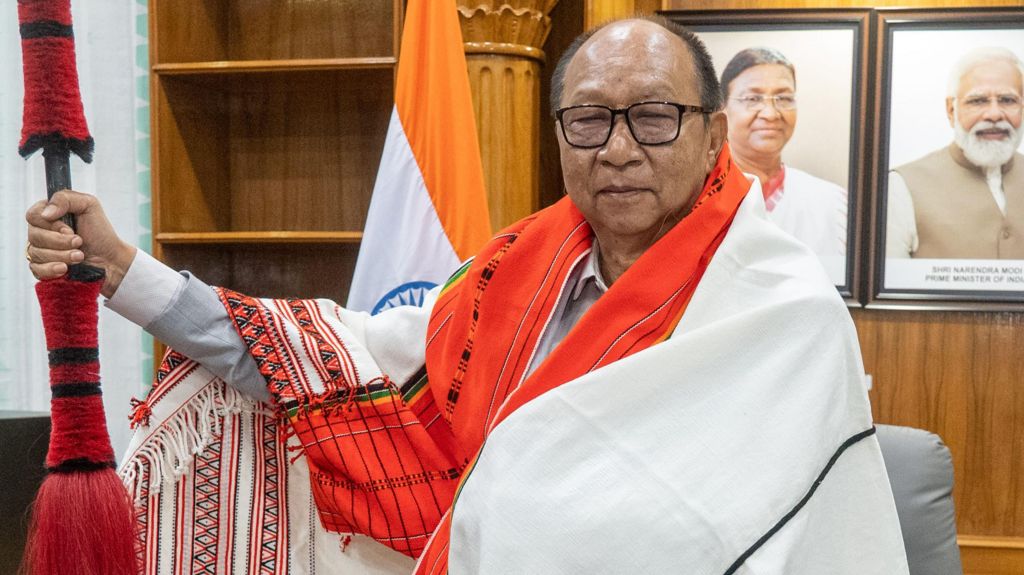
Yumnam Khemchand Singh, a fifth-dan black belt practitioner of taekwondo, has assumed office as Chief Minister of Manipur, marking the end of a year of direct federal rule imposed following devastating ethnic violence. The 62-year-old BJP leader takes charge of a state still reeling from clashes between the majority Meitei and minority Kuki-Zo communities that claimed over 260 lives in 2023.
Singh brings a unique profile to the role—a seasoned politician with deep ties to the RSS (the BJP’s ideological parent organization) who only entered electoral politics in 2017, previously serving as assembly speaker and state minister overseeing education and rural development. His cabinet composition reflects attempted ethnic balancing, with three ministers including one deputy chief minister from the Kuki-Zo community.
The new administration faces immediate challenges: ongoing segregation between communities with thousands displaced from their homes, fresh tensions between Kuki-Zo and Naga tribal groups, and persistent demands for separate administrative arrangements. Hours after Singh’s oath-taking ceremony on February 4, protests erupted in Churachandpur district, with Kuki-Zo civil society groups condemning their legislators’ participation in the government as a ‘betrayal.’
Opinion remains sharply divided on Singh’s prospects for success. Supporters point to his cross-community relationships and unusual December 2025 visit to a Kuki-Zo relief camp—seen as a significant outreach gesture. Critics argue that peace requires more than administrative management, demanding concrete roadmaps for conflict resolution, security assurances, and addressing core political demands.
Analysts suggest the coming weeks will be crucial in determining whether Singh’s leadership can transition Manipur from mere absence of violence toward genuine peace built on trust, justice, and political sincerity. The state’s history of armed resistance, controversial military powers in ‘disturbed areas,’ and complex ethnic diversity present formidable obstacles to reconciliation.